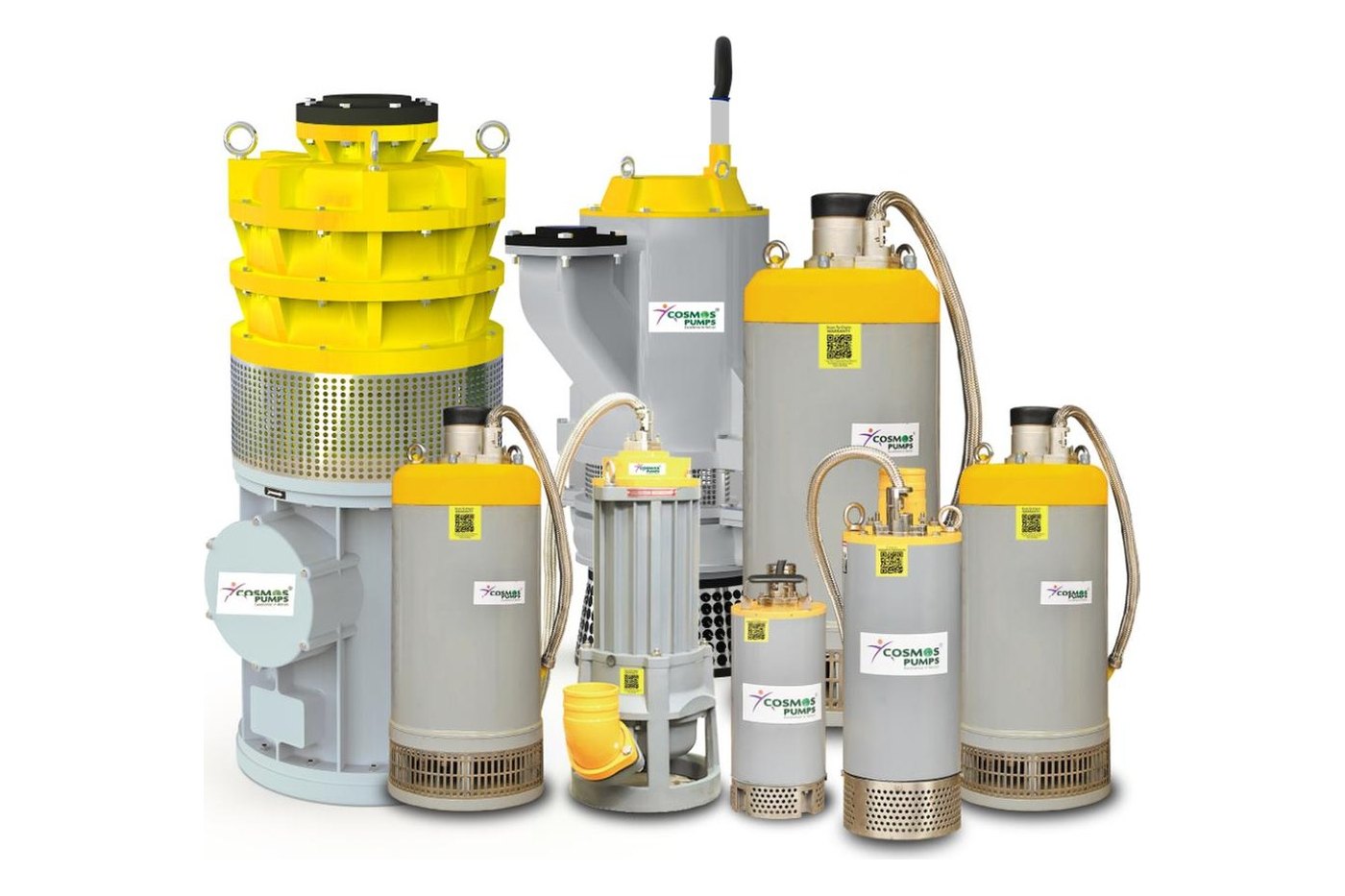
Industrial sectors which need to move liquid from ground level or submerged environments utilize submersible pumps on a regular basis. These units operate while fully immersed in the liquid. This type of pump is able to handle difficult situations, including deep-water applications and constant-duty operation, which require little human intervention.
Due to their compact installation, productive output, and their ability to operate underwater, submersible pumps are a top choice across several industries for handling various forms of wastewater, sludge and process water.
How Submersible Pumps Work Underwater
Submersible pumps are built to operate fully below the fluid surface and should remain electrically and mechanically intact. Their principle of working includes a closed electric motor with a hydraulic pump unit that enables the efficient movement of the fluid under submerged conditions.
Basic Construction and Sealed Motor Design
A submersible pump consists of two main components, the motor and the pump assembly. An Electric motor includes a waterproof casing, mechanical seals and O-rings. The seals are made for high-pressure applications and exposure to water or process fluid. The motor’s shaft connects directly to the pump impeller.
Water Entry and Discharge Process
The pump is designed to allow for the entry of liquid through the bottom of the pump. At the same time, centrifugal force acts to push liquid away from the centre of the pump and increase the flow velocity of the liquid through the pump casing. The fluid is then released forcefully through an opening attached to a pipe or hose, which moves it to where it is required.
Cooling Mechanism
Submersible pumps do not depend on air cooling as surface pumps do, but instead they use the liquid in the surrounding to cool down the generated heat in their motors. When the pump operates, it transfers heat to the fluid passing over the motor casing to keep its operating temperature constant. This is a cooling system which allows submersible pumps to operate effectively even in deep or enclosed installations.
Continuous Underwater Operation
Submersible pumps can be made to run at the same time when properly sized and installed. Their submerged position reduces the vibrations, noise, and mechanical stress. This makes them suitable to those applications that need a high operational time, like dewatering systems, transfer of effluents, and industrial drainage processes.
Which Submersible Pump Is Suitable For Industrial Use
Pump demands are higher in industrial settings than in residential or light commercial settings. Proper selection of the submersible pump is based on the conditions of operation, the nature of the fluids and performance needs.
Industrial Operating Conditions
The industrial conditions are characterized by high flow rate, changing pressure, abrasive liquids and extreme temperature. Pumps should be in good condition to work efficiently under such circumstances without excessive wear. Cast iron or stainless steel is usually used to make heavy-duty submersible pumps that resist corrosion and mechanical stress.
Solid Handling Requirements
Most industrial fluids either have floating solids, fibre or debris. Pumps must be designed to handle wastewater, sludge and slurry, with specially designed impellers, such as vortex, channel and cutter. These designs minimise the chances of clogging and also allow solids to pass through them without damaging internal components.
Power and Capacity Considerations
Industrial submersible pumps are supplied in a wide power range. Flow and head requirements need to be applied with proper calculations to make sure that there is no overloading of the pump. Large pumps consume more energy, and small pumps overheat or run out of life expectancy. Correct sizing enhances efficiency, minimizes the cost of operation and service life.
Typical Industrial Applications
People often use submersible pumps in mining dewatering systems and industrial wastewater treatment plants. They are also used in oil refineries, power plants and steel manufacturing facilities where reliable fluid handling is essential.
Submersible vs Centrifugal Pumps
Submersible and centrifugal pumps are both based on centrifugal force to pump fluids. However, their installation and working attributes vary greatly. These differences will help in choosing the suitable pump for a particular use.
Installation method
Submersible pumps are installed at the point of source of the fluid, e.g., a sump, tank or borehole. This does not require suction piping and priming systems. On the contrary, centrifugal pumps are typically elevated and need suction lines to draw fluid out of a source. This complicates installation in submerged or flooded regions.
Efficiency and Energy Use
Submersible pumps have fewer losses associated with cavitation and air intake due to the fact that they do not pull fluid but force it to rise because of the use of submersible pumps. This normally leads to increased overall system efficiency. Centrifugal pumps work well in controlled environments, but they may not work as well in harsh conditions because of suction losses and priming problems.
Maintenance Requirements
The minimum routine maintenance of submersible pumps is also ensured because their closed design prevents the internal parts to being contaminated. However, servicing will normally involve the removal of the pump from its installation. Centrifugal pumps are easier to maintain, but the seals and couplings that are visible may need more frequent attention.
Common Use Cases
Deep wells, flooded pits, wastewater systems, and underground installations are favoured with submersible pumps. The centrifugal pumps are typically used in clean water transfer, process circulation, and can be installed above the fluid elevation with constant suction circumstances.
Is An Electric Submersible Pump Safe?
Electric submersible pump have several safety measures to provide a stable performance in wet and hazardous conditions. They have a high degree of operational safety when installed and properly maintained.
Motor Sealing and Insulation
High-grade insulation and various sealing processes ensure that the motor is safe against water intrusion to the electrical parts. Oil chambers are commonly used to support mechanical seals to ensure lubrication and an extra barrier against leakages. This design reduces the chances of short circuits and motor failures.
Electrical Protection Systems
Contemporary submersible pumps have control panels with provisions of overload protection, phase failure protection, earth leakage detection, and thermal sensors. Such systems automatically deactivate the pump in case of any abnormal conditions, minimising the possibility of electrical accidents and broken equipment.
Installation and Handling Precautions
Safe installation requires the correct routing of cables, safe ways of lifting and proper alignment inside the sump or well. Electrical power cables should be guarded against mechanical wear and tear, and all connections have to meet electrical requirements. The procedures must always be done according to the manufacturer’s guidelines to prevent irreparable damage to the seals or the motors from getting misaligned.
Operating Safety Standards
Industrial-grade submersible pumps are made to meet all international safety and performance requirements. Submersible pumps can operate safely at the defined conditions as long as they are correctly maintained with both routine inspection and preventive maintenance when they are operated according to the standards.
FAQs
1. What is an electric submersible pump?
An electric submersible pump (ESP) is an electric-powered version of a submersible pump. It is suspended off the ground on a beam or other structure and typically uses a sealed rotor or electrical motor combined with an impeller.
2. Where are submersible pumps used?
Submersible pumps are usually used in industrial and municipal wastewater treatment facilities. However, they also have many uses in drilling for hydrocarbons and groundwater, such as in bore wells and construction sites.
3. Can submersible pumps handle solids?
Yes, industrial submersible pumps can handle solids when equipped with suitable impeller designs such as vortex, channel, or cutter impellers.
4. Are submersible pumps suitable for continuous operation?
Submersible pumps are designed for continuous-duty operation when properly sized, cooled by the surrounding fluid, and operated within recommended limits.
5. What safety measures are required for submersible pumps?
Proper motor sealing, electrical protection systems, correct installation, regular inspections, and following operating standards are some of the most important steps.
Conclusion
A submersible pump is one type of pump used in modern fluid-handling systems. These are ideal for environments that require submerged components due to their ease of use, providing cooling through water contact and compact installation. The knowledge of how submersible pumps work, where to use them effectively, and how they are different from centrifugal pumps will assist you in making an informed choice regarding the type of pump to use.
When selected and installed properly, submersible pumps provide a dependable solution for a wide range of industrial applications involving water, wastewater, and complex process fluids.