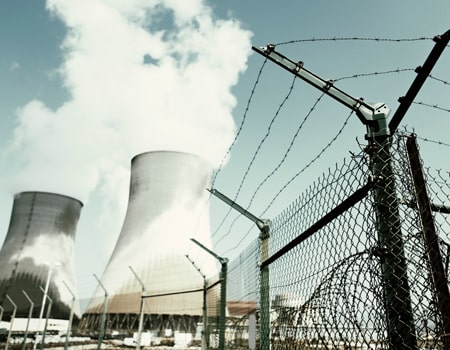
Consistent Dewatering Solutions for Power Plants
What Is Power Plant Dewatering?
Power plant dewatering is the controlled removal of water, slurry, and ash-laden effluents from thermal and hydro-electric power facilities to maintain safe, continuous operations. From fly-ash sump drainage at coal-fired thermal stations to excavation dewatering at dam sites and powerhouse caverns, correct pump selection prevents unplanned shutdowns, equipment damage, and environmental contamination. Cosmos Pumps supplies dewatering solutions across 30+ thermal and hydel power plant projects every year across India.
Thermal Power Plant Dewatering
Thermal power stations present two demanding and distinct dewatering challenges: ash handling and site groundwater control.
Ash Handling and Slurry Transfer
Coal combustion produces fly ash and bottom ash that must be transferred as a dense slurry from electrostatic precipitators and bottom-ash hoppers to the ash pond. This slurry carries a specific gravity (SG) of 1.5–2.0, with suspended solids of up to 70% by weight and abrasive silica particles that destroy standard pump wetted parts within weeks.
The Cosmos CSL Submersible Slurry Pump is engineered for this duty:
- Material of construction (MOC): 27% hi-chrome iron for all wetted parts — the industry standard for high-abrasion ash slurry applications
- SG capacity: Up to 2.1 — covers the densest bottom-ash slurry mixes
- Flow range: 1,584–5,834 LPM (26–97 m³/h)
- Shut-off head: 27.5–52.5 M
- Power range: Up to 100 HP
CSL-TV (Twin-Volute) variant is recommended for continuous 24/7 ash transfer duty. The twin-volute geometry distributes hydraulic forces evenly across the impeller shaft, reducing radial load and bearing wear — critical in ash transfer applications running 18–22 hours per day. Extended bearing life under continuous slurry duty is the CSL-TV’s primary design advantage over single-volute slurry pumps.
Coal Runoff and Site Drainage
Coal storage yards and coal handling plants generate heavily contaminated runoff water, especially during the Indian monsoon season (June–September). Standard dewatering pumps clog rapidly on this service. The CSL handles coal fines without clogging, while the CDW Standard Submersible Dewatering Pump covers clear-to-lightly-contaminated groundwater at on-site sumps, transformer bays, and cable tunnels (SG up to 1.1, solids 4–12 mm).
Hydro-Electric Power Plant Dewatering
Hydro-electric projects require dewatering at three distinct project phases:
- Dam site construction: Large-volume groundwater removal from deep excavations for dam foundations, powerhouse structures, and intake channels
- Operational drainage: Ongoing drainage of powerhouse basements, draft tube pits, and generator caverns
- Penstock and tunnel dewatering: Draining penstock lines and headrace tunnels for inspection and maintenance shutdowns
All three phases require high-head capability. Hydro project elevations routinely demand Total Dynamic Head (TDH) in excess of 100 M — in remote Himalayan or Western Ghats locations where robust, low-maintenance equipment is non-negotiable.
CDW Ultra High Head — The Hydro Dewatering Standard
For the demanding head requirements of hydro-electric dewatering, the Cosmos CDW Ultra High Head Submersible Pump is the primary specification:
| Parameter | Specification |
|---|---|
| Shut-Off Head | 90 M – 200 M |
| Flow Rate | 50 – 200 m³/h |
| Power Range | 50 – 120 HP |
| Water Type | Dirty/muddy water; 4–12 mm solids; SG up to 1.1 |
| Installation | Vertical or horizontal |
| Motor Insulation | Class H (180°C) with thermal sensor |
| Shaft Material | SS431 high-torsional-strength — rated for high-head multistage duty |
| Mechanical Seal | Dual SiC vs. SiC + oil seal (saline/high-abrasive tolerance) |
| Impeller | 2-stage SS316 for combined head and efficiency at high TDH |
The CDW-UH is supplied with a 20m power cable and naturally cooled motor, making it suited for vertical sump installation in deep powerhouse excavations. Horizontal installation capability allows deployment in drainage galleries and penstock inspection sumps.
CDW High Head — Medium-Depth Hydro Applications
For powerhouse drainage sumps and drainage galleries where TDH is 40–140 M, the CDW High Head (5–75 HP, 350–2,200 LPM) provides a cost-optimised alternative. CDW-HH is frequently deployed in relay-pump configurations to extend effective head beyond the single-pump TDH envelope — one pump to an intermediate sump, a second pump lifting to surface.
Product Selection — Power Plant Dewatering
| Application | Typical Conditions | Cosmos Product |
|---|---|---|
| Fly-ash slurry transfer | SG 1.5–2.0; 24/7 duty | CSL-TV Slurry Pump |
| Bottom ash sump drainage | SG up to 2.1; high abrasion | CSL Slurry Pump |
| Coal runoff drainage | Coal fines; variable flow | CSL / CDW Standard |
| Hydro dam excavation | TDH 90–200 M; clean-to-turbid | CDW Ultra High Head |
| Powerhouse basement drainage | TDH 40–140 M; moderate flow | CDW High Head |
| Penstock / tunnel dewatering | Variable head; relay config | CDW-UH / CDW-HH |
| Construction site drainage | TDH 15–87 M; muddy water | CDW Standard |
| Plant-site surface drainage | Large volume; engine-driven | CAP Auto-Prime |
TDH Sizing Guide for Power Plant Installations
Correct Total Dynamic Head (TDH) sizing prevents both undersizing (pump stalls before reaching discharge) and oversizing (excessive energy cost, off-curve operation, premature bearing failure). For power plant dewatering:
TDH = Static Head + Friction Losses + Safety Margin
- Static Head: Vertical height from suction water level to discharge point
- Friction Losses: Typically 10–25% of static head, depending on pipe diameter, length, and fittings — higher for long penstock drain runs or small-diameter delivery pipes
- Safety Margin: Add 15–20% for dewatering applications where inflow rate can vary significantly with weather or construction activity
Example: Hydro powerhouse excavation with 100 M static head and 200 m of 150mm delivery pipe → estimated TDH ≈ 120–125 M. CDW Ultra High Head at 50 HP operating at 110–130 M TDH is the correct duty point.
Contact the Cosmos technical team with your site static head, pipe run details, and required flow rate for a full system curve analysis and pump duty point recommendation.
CosmoSmart™ IoT Integration for Power Plant Duty
Unplanned ash pump stoppages at thermal plants require immediate intervention — ash slurry can begin to set in discharge pipes quickly, requiring costly manual cleaning or pipe replacement. CosmoSmart™, Cosmos’s IoT pump monitoring system, reduces this risk by providing:
- Real-time flow and performance data: Detect flow reduction as an early clog warning before a full blockage develops
- Vibration and temperature alerts: Elevated vibration can indicate impeller imbalance or bearing wear, allowing scheduled maintenance before failure
- Remote start/stop control: Coordinate ash transfer cycles without on-site personnel at each pump location
- 6-month historical performance log: Running hours, flow data, and alert history for maintenance planning and regulatory compliance
CosmoSmart is available on all CSL slurry pump deployments at thermal stations and can be integrated with existing SCADA or DCS systems where required.
Project — Hydro-Electric Dewatering, Uttarakhand
Project type: Run-of-river hydro-electric project, Uttarakhand Himalayas
Application: Powerhouse cavern excavation dewatering during civil works phase
Challenge: 115 M static head from underground powerhouse to surface discharge; highly turbid inflow from fractured Himalayan geology; 18-month continuous duty requirement during monsoon and dry seasons
Solution deployed: 2× CDW Ultra High Head (75 HP each) in relay configuration — primary pump at 60 M head to intermediate collection sump, secondary pump lifting from intermediate sump to surface discharge at 55 M effective head
Outcome: Continuous dewatering maintained throughout the civil and concreting programme; zero pump-related schedule delays; planned bearing replacement at 8,000 operating hours per maintenance schedule
Cosmos Power Plant Credentials: 30+ Thermal and Hydel power plant dewatering projects deployed every year across India.
Why Cosmos Pumps for Power Plant Dewatering?
- Proven power plant experience: 30+ thermal and hydel projects per year — the segment is a core annual deployment, not an occasional project
- Purpose-built slurry pumps: CSL with 27% hi-chrome MOC is the correct tool for ash duty; not a modified general-purpose pump
- High-head dewatering range: CDW Ultra High Head to 200 M covers all hydro excavation depths
- ISO & CE certified manufacturing from Faridabad, Haryana
- Rental + EPEC + O&M: Cosmos can supply, install, commission, and operate power plant dewatering systems end-to-end — zero capital outlay option available via rental fleet
- CosmoSmart™ IoT: Remote monitoring for unattended ash pump operation
Frequently Asked Questions — Power Plant Dewatering
What type of pump is used for ash transfer in thermal power plants?
Submersible slurry pumps with hi-chrome iron wetted parts are the standard for ash transfer duty. The 27% hi-chrome MOC in the Cosmos CSL and CSL-TV resists the abrasion from silica-rich fly ash and bottom ash slurry at SG 1.5–2.0. Standard dewatering pumps with cast-iron or standard alloy impellers will fail rapidly on ash slurry service.
What is the SG of fly-ash slurry and why does it affect pump selection?
Fly-ash slurry typically runs at SG 1.4–1.8, while bottom-ash sump mixtures can reach SG 2.0–2.1. A pump specified for SG 1.1 (standard dewatering duty) will overload and stall on ash slurry. The Cosmos CSL is rated to SG 2.1, providing the required safety margin for the densest bottom-ash applications.
What head is typically required for hydro powerhouse excavation dewatering?
Hydro powerhouse caverns often sit 50–150 M below the nearest surface discharge point. With pipe friction losses, TDH in the 90–180 M range is common for large Himalayan and Western Ghats projects. The Cosmos CDW Ultra High Head (90–200 M shut-off head) covers this range as a single pump or as the first relay stage in a multi-pump configuration.
Can the same pump handle both ash slurry transfer and site groundwater drainage at a thermal plant?
No. Ash transfer requires hi-chrome slurry pumps rated for SG 2.0+ and 70% solids by weight. Site groundwater drainage uses standard dewatering pumps (CDW series, SG up to 1.1). Using a standard dewatering pump on ash slurry will cause rapid impeller and volute erosion within weeks. Cosmos supplies both pump types and advises on which sumps require slurry-rated equipment.
What pump is recommended for penstock draining during scheduled maintenance outages?
Penstock drainage is a periodic, intermittent-duty application — drain down from operating level once or twice a year during scheduled outages. The CDW Ultra High Head or CDW High Head in portable submersible configuration is the standard choice for high-head penstocks. CAP auto-prime surface pumps are used for shorter penstock sections where the static suction lift is within 8.5 M from the pump location.
How does Cosmos support continuous 24/7 ash pump operation?
For critical ash transfer applications, Cosmos recommends the CSL-TV twin-volute design for extended bearing life under continuous duty. A matched duty + standby pump set with single control panel is standard practice. CosmoSmart™ IoT monitoring provides real-time performance visibility for unattended operation. Cosmos also offers O&M contracts post-commissioning for thermal station ash systems.
What certifications do Cosmos power plant dewatering pumps carry?
Cosmos pumps carry ISO and CE certification from the Faridabad manufacturing facility. For thermal and hydro power plant tenders specifying compliance with Central Electricity Authority (CEA) guidelines or IS standards, Cosmos engineering can provide project-specific technical documentation and certified pump curves.
How quickly can Cosmos mobilise dewatering equipment to a power plant site?
Cosmos operates a Pan-India fleet with rental and EPEC mobilisation capability. For urgent thermal or hydro plant dewatering requirements, equipment can typically be mobilised within 24–72 hours from the nearest Cosmos depot. Contact our team with the site location, required pump specification, and timeline.
Objectives:

Ensure Continuous Power Generation

Prevent Flooding

Maintain Tunnel Tail Integrity

Facilitate Effective Heat Exchange