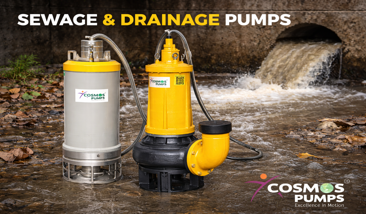
Proper treatment of wastewater and surplus floodwater is necessary to create livable infrastructure. Whether for homes, commercial structures or industrial facilities, everyone needs to have a reliable water removal system. Standing water from heavy rains can build up quickly in basements and low-lying areas. The wrong pump causes clogs, breakdowns and is a safety hazard. Performance, energy consumption and maintenance depend on selecting the right pump for your needs. This blog is going to break down what sewage and drainage pumps do, how to select them, and where they are best used.
Which Pump Should Be Used for Raw Sewage?
A sewage pump should be capable of handling a combination of water and solid matter. It contains solid, fibrous waste, grease and other organic matter which water pumps can not handle. A waste pump is specifically designed to move untreated wastewater without blockage.
1. Nature of Raw Sewage
Raw sewage is a heterogeneous medium of water and solids. It is full of human waste, toilet paper, food scraps, grease and sometimes sand or grit. The fluid is irregular and abrasive. It can also release corrosive gases. To handle raw sewage, pumps need to be tough, resistant to corrosion and able to withstand irregular flow conditions.
2. Solid Content and Particle Size
Sewage includes solids of different sizes and textures. Some are soft and fibrous. Others are hard and abrasive. If a pump cannot accommodate these solids, clogging occurs on a regular basis. Waste pumps are fabricated with wide clearances to pass solids without difficulty and minimise maintenance problems.
3. Non-Clog and Sewage Pump Designs
Non-clog sewage pumps use specialised impeller designs such as vortex or single-channel impellers. These designs minimise direct contact between solids and the impeller. In some cases, cutting or grinding mechanisms are included. The goal is uninterrupted flow and reduced risk of blockages during continuous operation.
4. Submersible Sewage Pump Suitability
Submersible sewage pumps are immersed in the water. Instead of pulling sewage through suction, they push it upward. This results in greater reliability and removes priming problems. The liquid around these pumps cools the motor. It is ideal for a variety of applications such as sewage pits, sumps and underground chambers.
Is a Submersible Sewage Pump Better Than a Surface Pump?
There are pros to both types of sewage pumps. The choice is made based on the space for installation, safety requirements, and application specifics.
1. Installation and Space Requirements
Submersible pumps require very little surface space. They are installed directly inside pits or tanks. Surface pumps need a dry, protected area and additional suction piping. Where space is limited, submersible pumps offer a more practical solution.
2. Handling of Solids and Debris
Submersible pumps handle solids more effectively because they are closer to the sewage source. There is less chance of air entering the system. Surface pumps can face priming problems and suction loss, especially when solids are present. Heavy sewage applications generally favour submersible designs.
3. Efficiency and Operational Safety
Submersible pumps are quiet and do not contribute to harmful sewage gas exposure. Their closed body design adds to electrical safety in wet locations. Surface pumps are simpler to inspect. But they require careful monitoring against dry running and air locking.
4. Typical Use Cases for Each Type
These pumps are used in residential basements, commercial buildings and municipal sewage systems. Surface pumps are typically used for temporary bypass pumping or in dry industrial applications with regular inspections.
What Size Sewage Pump Is Required for Heavy Waste?
Pump sizing is crucial when it comes to heavy waste. A pump that is too small will become clogged or burned out. A pump that is too large wastes energy and increases operating costs.
1. Flow Rate Requirements
Flow rate depends on the volume of wastewater generated. Residential systems usually need lower flow rates, while industrial and municipal systems require much higher capacities. Peak flow conditions must always be considered to avoid overloading the pump during high-use periods.
2. Solid Handling Capacity
Heavy waste applications call for big solid-handling pumps. The maximum solid size should correspond to the expected type of waste. If the liquid includes fibrous materials, use a pump with non-clog impellers. If the discharge pipe is narrow, a grinder pump is needed.
3. Head and Discharge Distance
Head is the sum of static lift and friction loss in the pipeline. Resistance also increases with longer discharge distance and elevation rise. Pumps are sized based on total system head to provide a uniform flow and prevent premature failure.
4. Industrial and Municipal Use Scenarios
Municipal sewage systems handle continuous and heavy loads. Reliability and durability are critical. Industrial sites can have varying waste compositions, such as a combination of chemicals or harsh materials. In these circumstances, it is usually necessary to have a custom pump size and material.
How to Choose a Drainage Pump for Flood Water
Drainage pumps are designed to remove unwanted water. Choosing the correct drainage pump ensures quick dewatering and prevents equipment damage.
Type of Flood Water
Flood water may be merely rainwater or could be contaminated with mud and debris. Water pumps are suitable for low-contaminated environments only. Dirty water requires pumps with wider passages to handle suspended particles safely.
Presence of Debris and Silt
Silt and debris increase wear on pump components. Small inlet pumps can clog easily in such conditions. Drainage pumps with larger inlets or trash-handling capabilities perform better where debris is present.
Temporary vs Long-Term Use
For emergency flooding, portable pumps need to be deployed rapidly. For permanent drainage solutions, look for long-term features that help protect your home and assets, such as a hermetically sealed motor with automatic reset thermal overload protection and high capacity for all popular inlet sizes.
Portable and High-Flow Drainage Pumps
Portable dewatering pumps are great for temporary and emergency use. High-flow pumps evacuate water more rapidly. Use an electric pump for indoor flooding. A fuel-powered one can be useful where electricity is not available.
Difference Between Sewage and Drainage Pumps
Sewage and drainage pumps may appear to be the same, but they actually fulfil different needs. An incorrect pump will have you replacing it constantly and spending money on repairs.
Pump Design and Construction
Sewage pumps are heavy-duty and built from corrosion-resistant materials. Drainage pumps are lighter and designed mainly for water movement rather than waste handling.
Solid Handling Capability
Sewage pumps can handle large solids and fibrous waste. Drainage pumps can only manage limited debris. Solid size ratings must always be checked before selection.
Typical Applications
Sewage pumps are used for wastewater from toilets and industrial processes. Drainage pumps are used for rainwater, floodwater, and site dewatering.
Operating Conditions
Sewage pumps operate in contaminated and corrosive environments, often continuously. Drainage pumps usually run intermittently and deal with less aggressive fluids.
Here’s a summary of the differences between the two:
| Feature | Sewage Pump | Drainage Pump |
| Primary Use | Raw and treated sewage | Flood and surface water |
| Solid Handling | High solid capacity | Limited solids |
| Pump Design | Non-clog or grinder | Open or semi-open impeller |
| Installation | Mostly submersible | Portable or fixed |
| Operating Fluid | Contaminated wastewater | Clean or dirty water |
FAQ Section
What is a sewage pump used for?
A sewage pump is utilized to transfer wastewater and solids in a location where gravity flow does not work. It provides safe disposal of sewage from lower levels.
What is the difference between sewage and drainage pumps?
Sewage pumps process waterborne waste and solids, while drainage pumps process only clear water. Their design and ability to handle solids are quite different.
Which pump is suitable for wastewater with solids?
A non-clog or submersible sewage pump is suitable. It is designed to pass solids without blockage.
Can a drainage pump handle sewage water?
Drainage pumps should not be used for sewage. They can clog, fail, and cause hygiene issues.
When should a submersible sewage pump be used?
It is appropriate where sewage accumulates in pits or underground chambers. It is ideal for enclosed and continuous systems.
Conclusion
The appropriate sewage or drainage pump can be selected based on the wastewater that needs to be pumped out, percentage of solids, flow rate and discharge operation. Head, operating cycle and installation environment also make a difference. You would require sewage pumps for solid-heavy waste. Drainage pumps are used for water removal.
Selecting the type of pump best suited for a particular location or application results in greater efficiency, fewer breakdowns and longer durability.