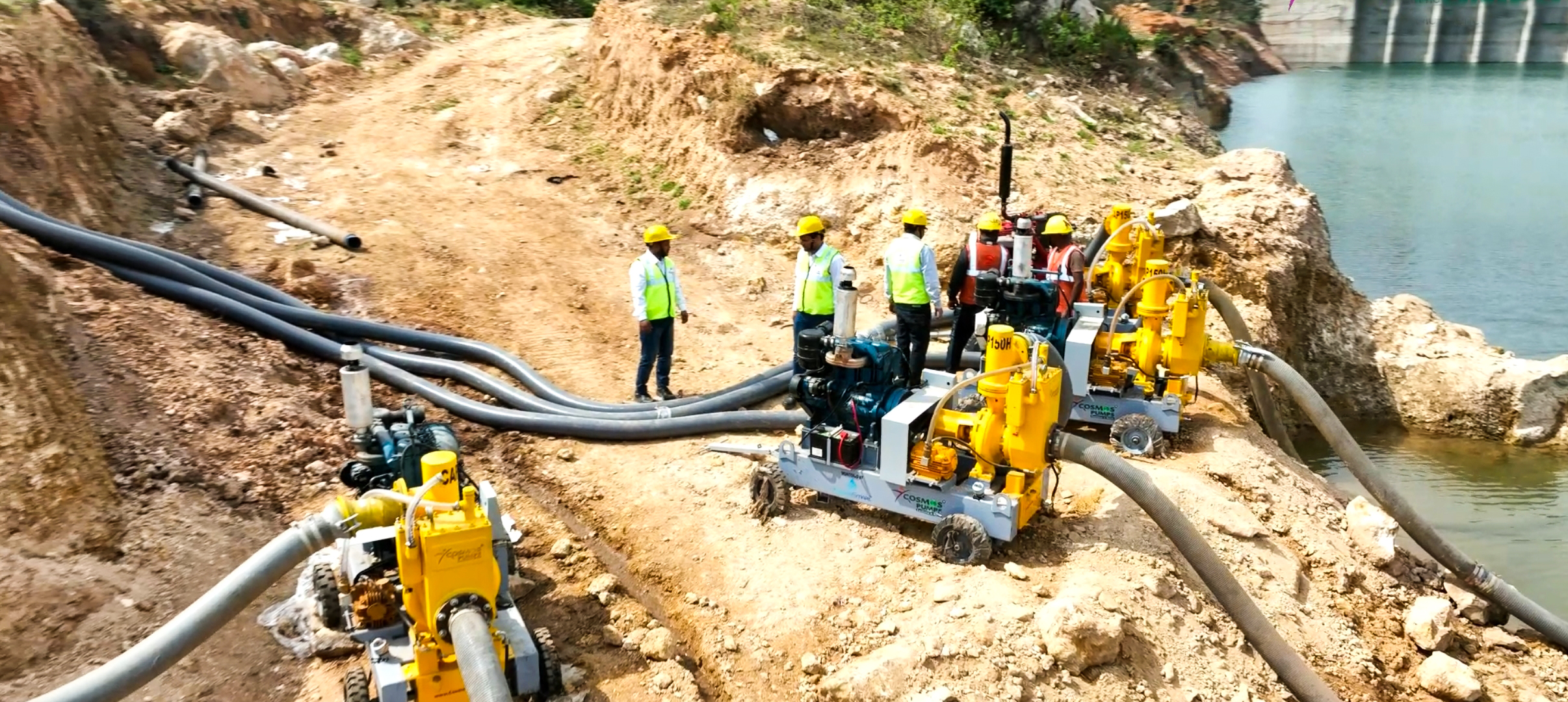
Quick Answer
To choose the right dewatering pump, consider water volume, head height, soil type, pump capacity, power source, and site conditions. Selecting the correct pump improves efficiency, reduces downtime, and ensures smooth project execution.
Introduction
Selecting the right dewatering pump is one of the most important decisions in any municipal, construction, or industrial project. A wrong choice can lead to inefficiency, increased costs, and project delays, while the right pump ensures smooth operations and long-term reliability.
Whether your project is located in India, the UAE, or Saudi Arabia, conditions such as soil type, water level, and climate play a major role in pump selection. Cosmos Pumps provides a wide range of high-performance dewatering pumps designed to meet these diverse requirements.
Key Factors to Consider When Choosing a Dewatering Pump
1. Water Volume (Flow Rate)
The amount of water that needs to be removed determines the pump capacity.
- Small projects → low flow pumps
- Large projects → high-capacity pumps
Choosing the correct flow rate ensures efficient water removal.
2. Head Height (Discharge Distance)
Head refers to how high or far the pump needs to move water.
- Low head → standard pumps
- High head → heavy-duty pumps
Incorrect head selection can reduce performance significantly.
3. Type of Water
Not all water is the same.
- Clean water
- Muddy water
- Slurry or abrasive material (slurry pump)
Cosmos Pumps offers specialized pumps designed to handle different types of fluids efficiently.
4. Power Source
Depending on site conditions, you can choose:
- Electric pumps → suitable for continuous use
- Diesel pumps → ideal for remote locations
5. Soil and Site Conditions
Soil type affects water movement and pump performance.
- Sandy soil → easier water flow
- Clay soil → requires vacuum-assisted pumps
6. Portability and Installation
For temporary projects, portable pumps are more suitable.
For long-term operations, fixed installations may be required.
Types of Dewatering Pumps
- Submersible Pumps: Operate underwater and ideal for flooded areas
- Auto-Prime Pumps: Easy to start and suitable for quick deployment
- Diesel Dewatering Pumps: Work without electricity and ideal for remote sites
- Vacuum-Assisted Pumps: Effective in low permeability soils
Regional Considerations
India
- Monsoon conditions
- High groundwater levels
UAE
- Sandy and coastal soil
- High temperature
Saudi Arabia
- Desert environment
- Large-scale infrastructure projects
Choosing pumps suited to regional conditions improves performance.
Common Mistakes to Avoid
- Choosing incorrect pump size
- Ignoring soil conditions
- Not considering maintenance needs
- Selecting low-quality equipment
Benefits of Choosing the Right Pump
- Faster project completion
- Reduced operational costs
- Lower maintenance requirements
- Improved safety
Why Choose Cosmos Pumps
- High-performance dewatering pumps
- Reliable solutions for global markets
- Durable and energy-efficient equipment
- Easy maintenance and long life
Conclusion
Selecting the right dewatering pump is essential for project success. By considering factors like flow rate, head, soil conditions, and power source, you can ensure efficient and reliable operations.
With advanced solutions from Cosmos Pumps, you can handle even the most challenging dewatering requirements with confidence.
FAQs
1. What is the most important factor in pump selection?
Flow rate and head are the most critical factors.
2. Which pump is best for construction sites?
Submersible and auto-prime pumps are commonly used.
3. Can one pump handle all types of water?
No, different pumps are designed for different conditions.
4. Are diesel pumps better than electric pumps?
Diesel pumps are better for remote areas.
5. Why choose Cosmos Pumps?
Cosmos Pumps offers reliable and efficient solutions for various industries.