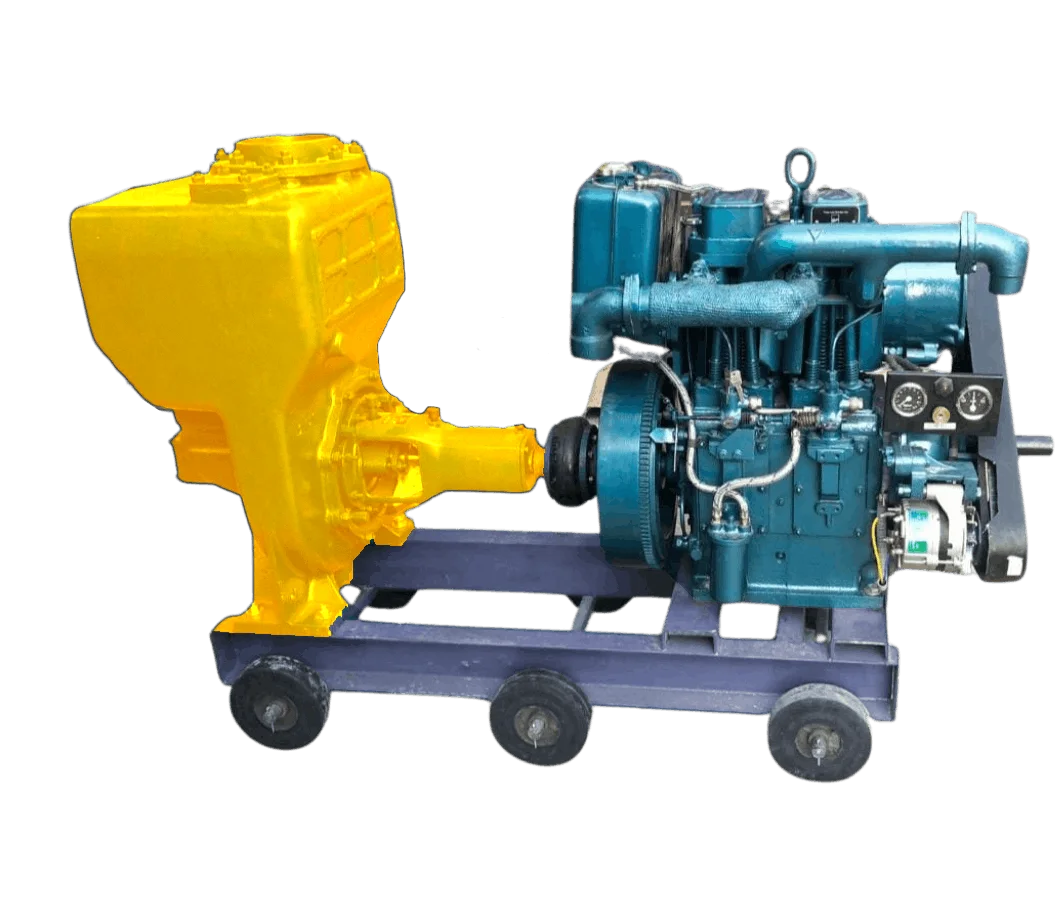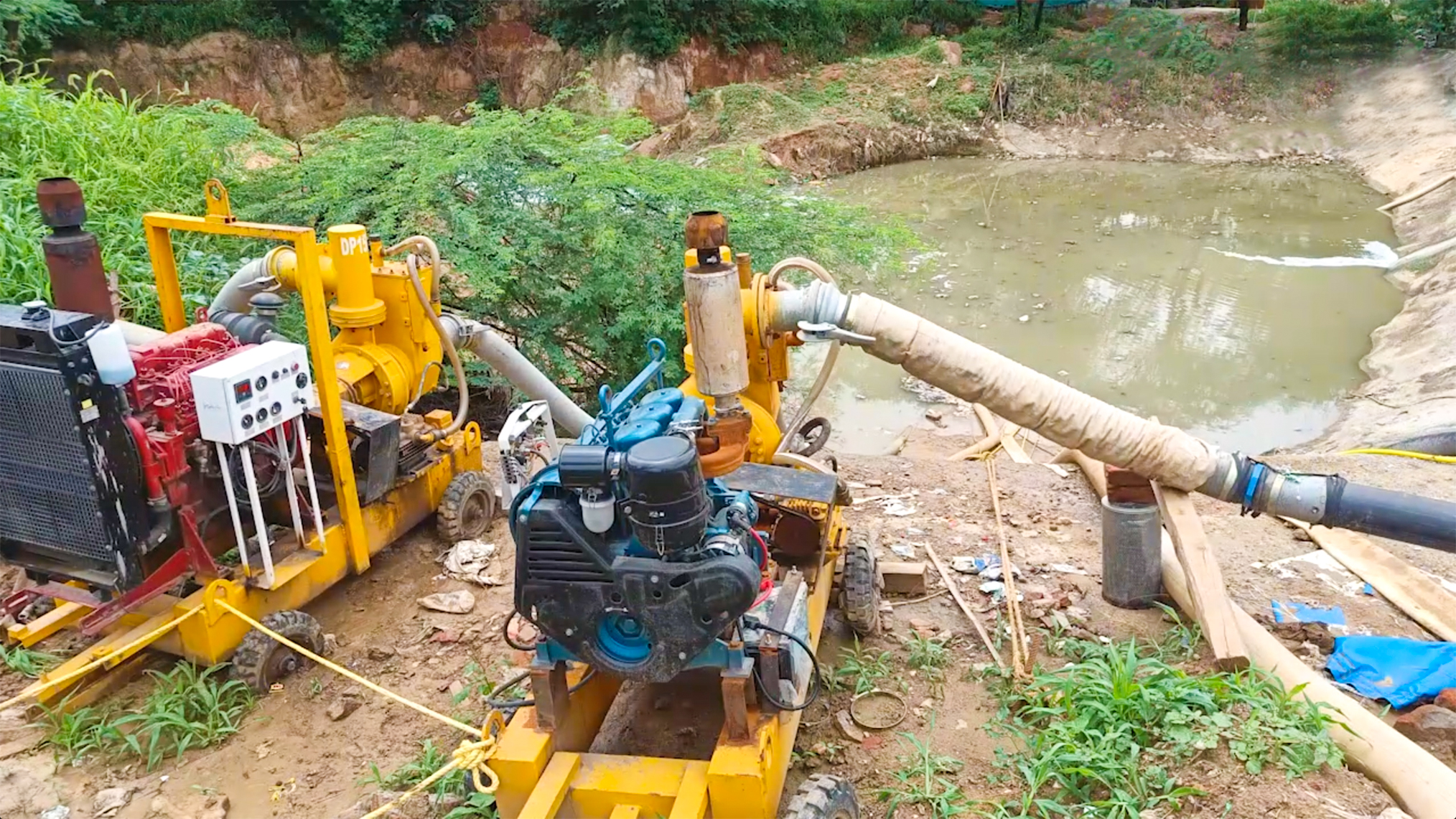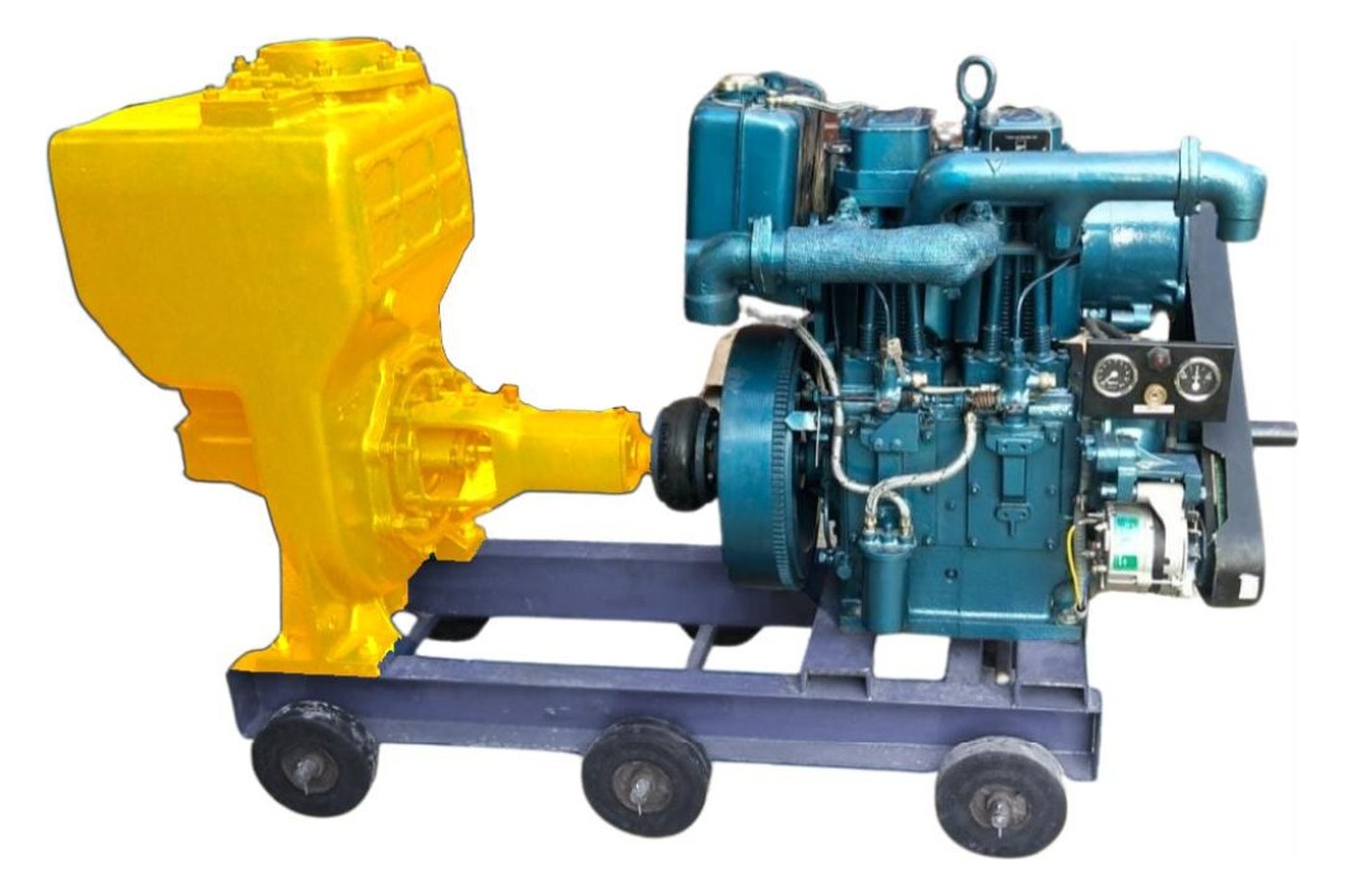
Site engineers and EPC contractors regularly face the same specification question: do you need a self-priming pump, an auto-priming pump, or a standard centrifugal pump? The terminology is confusing because all three types use a centrifugal impeller at their core — the difference is entirely in how each type handles the air in the suction line before water flow begins. Choosing wrong costs you operator time, site downtime, or pump damage. This guide cuts through the confusion with a side-by-side comparison and clear selection rules for construction, mining, and municipal dewatering applications.
What Is the Difference Between a Self-Priming and Auto-Priming Pump?
A self-priming pump retains water in its volute casing between shutdowns and uses that residual water to expel suction-line air on restart — without manual flooding. It requires an initial prime on first installation but re-primes automatically on subsequent starts, as long as the casing water is not fully lost.
An auto-priming pump uses a dedicated priming mechanism — typically a separate priming reservoir and a re-circulation loop — to actively evacuate air from the suction pipe, even from completely dry conditions, with zero operator intervention. It can start, prime, and deliver full flow after extended dry runs, with no initial operator filling required.
A standard centrifugal pump does neither: it must be pre-filled (primed manually) before each start, or the suction line must be kept flooded via a foot valve. Submersible centrifugal pumps — always immersed in the fluid — solve the priming problem by operating underwater.
What Is a Standard Centrifugal Pump?
A centrifugal pump converts motor energy into fluid velocity using a rotating impeller. The impeller works only when surrounded by liquid — it cannot move air efficiently. Without liquid at the impeller on startup, no suction pressure builds and the pump runs dry.
Surface-mounted centrifugal pumps without a self-priming feature require manual flooding of the casing and suction line before each start. In Indian construction dewatering practice, they have largely been replaced by self-priming and submersible alternatives. Submersible centrifugal pumps — such as the Cosmos CDW series — are the dominant form: the pump is permanently immersed, so priming is never an issue.
Cosmos CDW Submersible Centrifugal (key specs):
| Parameter | Range |
|---|---|
| Shut-off head | 15.5 m – 86.5 m |
| Flow rate | 450 – 8,500 LPM |
| HP range | 1.5 – 50 HP |
| Solids handling | 4–12 mm |
| Power source | Electric motor |
| Dry-run tolerance | None — seals damaged immediately |
When to use: Tunnels, basements, mine sumps, construction excavations — any situation where the pump can be immersed in the water being pumped and reliable electrical supply is available.
What Is a Self-Priming Pump?
A self-priming pump has a specifically designed volute and impeller chamber that holds a reserve of water after the pump shuts down. On restart, this retained water mixes with incoming air from the suction line, and the impeller creates a water-air slurry that is progressively ejected through the discharge. As air leaves, suction pressure rises until the pump is fully primed and water flows continuously.
Key limitation: if the pump runs completely dry long enough to lose the water charge in the casing (for example, during extended idling at a dry sump), re-priming will fail on the next start until the operator refills the casing manually.
The Cosmos CSP (Self-Priming Surface Pump) operates on this principle:
| Parameter | Range |
|---|---|
| Shut-off head | 28 m |
| Flow rate | Up to 4,500 LPM |
| HP range | Up to 30 HP |
| Suction lift | Up to 6 m |
| Power source | Electric motor |
| Dry-run tolerance | Very limited |
| Cold-start prime time | 2–4 minutes |
Applications: Foundation dewatering, trench dewatering, construction sites with stable electrical supply, sewage and ash-water transfer, flood control at moderate scale.
Internal link: Self-Priming Pumps (CSP) →
What Is an Auto-Priming Pump?
An auto-priming pump goes a step further. A dedicated priming reservoir, permanently mounted on the pump, holds a charge of water. When the pump starts, this priming water is re-circulated through the impeller at high velocity, creating a partial vacuum that draws air out of the suction pipe. Air mixes with the priming water and is expelled through the discharge. The cycle continues — automatically — until the full suction column is water-filled, flow stabilises, and the pump operates at full duty.
Because the priming mechanism is independent of suction-line water, the pump can prime from a completely dry suction pipe and restart after extended dry-run events without operator intervention. This is the defining difference between auto-priming and self-priming: auto-priming works from zero liquid in the suction; self-priming needs residual casing water.
The Cosmos CAP (Auto-Prime Surface Pump) is the leading dewatering auto-prime in India:
| Parameter | Range |
|---|---|
| Shut-off head | 2 m – 169 m |
| Flow rate | Up to 74,483 LPM |
| HP range | Up to 1,550+ HP |
| Suction lift | Up to 9.8 m |
| Power source | Diesel engine (KOEL / Eicher / Baudouin / CAT) |
| Dry-run tolerance | Extended — designed to run dry without damage |
| Cold-start prime time | 30–90 seconds from dry |
| Solids handling | 15 mm (closed impeller) / 75 mm (open impeller) |
Applications: Flood control, mining and quarry dewatering, large construction, municipal bypass pumping, oil and gas.
Internal link: Auto-Priming Pumps (CAP) →
Self-Priming vs Auto-Priming vs Centrifugal Pump: Full Comparison
| Criteria | Centrifugal (CDW Submersible) | Self-Priming (CSP) | Auto-Priming (CAP) |
|---|---|---|---|
| Max head | 86.5 m | 28 m | 169 m |
| Max flow | 8,500 LPM | 4,500 LPM | 74,483 LPM |
| Solids handling | 4–12 mm | Small solids | 15–75 mm |
| Dry-run tolerance | None | Very limited | Extended |
| Prime time | Not applicable (always submerged) | 2–4 min (cold start) | 30–90 sec (from dry) |
| Power source | Electric motor | Electric motor | Diesel engine |
| Suction lift | 0 (submerged) | Up to 6 m | Up to 9.8 m |
| Operator intervention | None at startup | Required on first fill | Zero after commissioning |
| Portability | Moderate | Moderate | High (trolley-mounted) |
| Relative cost | Lowest | Moderate | Highest |
Which Pump for Which Job?
Submersible Centrifugal (CDW): Choose When the Pump Can Be Immersed
The submersible route eliminates priming entirely — the pump is always surrounded by the fluid it transfers. Choose it when:
- The pump point is a sump, pit, tunnel, or basement where the unit can be lowered into the water
- Electrical supply is stable and continuous
- Head requirements are 15–86.5 m (standard CDW) or higher (CDW High Head / Ultra High Head up to 200 m)
- Multiple small sumps need independent pumps rather than one large surface unit
- Space on the surface is constrained or the pump must be completely out of sight
Submersible units also work in confined spaces where a surface pump and suction pipe would be impractical — metro tunnel dewatering and basement flood recovery are typical examples.
Self-Priming (CSP): Choose for Moderate Surface Installations with Power
The CSP is the correct choice when the pump must be installed above the water source but electrical supply is reliable and flow requirements are moderate. Choose it when:
- Suction lift is under 6 m
- Flow rates are within 4,500 LPM and head within 28 m
- Construction site power is stable (generator or grid)
- Applications are intermittent — pump starts and stops as water level varies in the sump
- Chemical effluents, ash-water, or sewage bypass at smaller scale
The CSP handles the mid-tier of Indian construction dewatering — foundation pits, trench dewatering, and water logging in smaller projects where an auto-prime diesel unit would be over-specified.
Auto-Priming (CAP): Choose for High Flow, Remote, or Unattended Duty
The CAP is the correct choice when any of the following conditions apply:
- No reliable power supply — diesel autonomy is essential
- Suction lift exceeds 6 m or approaches 9.8 m
- Very high flow rates — flood control, mine dewatering, large civil projects
- Unattended operation — the pump must restart automatically after shutdown without an operator on site
- Multiple site relocations — trolley-mounted CAP units move with the work
- Solids up to 75 mm — open impeller CAP handles gravel, fibrous material, and large suspended solids that would block a CSP
Cosmos deploys 80+ CAP units per monsoon season for flood control, 50+ on mining projects per year, and 300+ on construction sites annually. When operational continuity outweighs upfront cost, the CAP is the standard choice.
One-Minute Selection Guide
Step 1 — Can the pump be fully submerged in the water?
– Yes → Submersible centrifugal (CDW). Stop here.
– No → Continue to Step 2.
Step 2 — Is reliable electrical supply available at the site?
– Yes → Continue to Step 3.
– No → Auto-priming diesel pump (CAP). Stop here.
Step 3 — What is the vertical distance from pump to water surface?
– Under 6 m → Self-priming electric pump (CSP).
– Over 6 m → Auto-priming diesel pump (CAP).
Step 4 — Does the pump need to restart unattended (flood control, 24/7 duty)?
– Yes → Auto-priming pump (CAP), regardless of suction lift.
Frequently Asked Questions
What is the difference between a self-priming and auto-priming pump?
A self-priming pump uses residual water retained in its casing to expel suction-line air on restart. It re-primes automatically from a partial-water condition but requires an initial operator fill on first installation and may fail to re-prime if completely dried out. An auto-priming pump uses a dedicated priming reservoir and re-circulation loop to actively evacuate air from a fully dry suction line, requiring zero operator intervention even after complete dry runs. Auto-priming pumps also achieve greater suction lifts (up to 9.8 m vs 6 m for self-priming) and are typically diesel-driven for remote and high-flow duty.
Can a standard centrifugal pump prime itself?
No. A surface-mounted standard centrifugal pump cannot self-prime — the impeller only creates suction pressure when surrounded by liquid. It must be manually flooded (primed) or operate with a foot valve keeping the suction line filled before each start. Submersible centrifugal pumps solve this by operating permanently submerged, so priming is never required.
Which pump has the best suction lift?
Auto-priming pumps achieve the highest suction lift — up to 9.8 m for the Cosmos CAP series. Self-priming pumps achieve 5–6 m suction lift. Standard surface centrifugal pumps require the suction line to be flooded (0 m effective suction lift without a foot valve). Submersible pumps have no suction lift constraint as they operate below the water surface.
Can a self-priming pump run dry?
Very briefly — seconds to low minutes — but not by design. A self-priming pump depends on the water retained in its casing. If the pump runs dry long enough to lose that casing water, it will not re-prime on the next start until the operator refills it manually. Prolonged dry running also overheats the mechanical seals. Auto-priming pumps (CAP) are specifically built to cycle through dry-run conditions as part of their priming sequence, with no operator intervention required.
Why are auto-priming pumps diesel-driven?
Two reasons: (1) the flow rates required for flood control and mining dewatering far exceed what standard electric motors deliver at site-available power ratings — the Cosmos CAP goes up to 1,550+ HP in diesel form; (2) diesel autonomy is essential for remote locations, emergency flood response, and sites where grid power is intermittent or absent. Diesel also allows the pump to be trailer-mounted and relocated independently of power infrastructure.
Which pump is best for flood control?
Auto-priming diesel pumps (CAP) are the standard for large-scale flood control. Flood dewatering demands very high flow rates (often 30,000–74,000 LPM), 24/7 unattended operation, diesel autonomy, and the ability to start immediately after relocation to a new deployment point. Self-priming electric pumps are limited to moderate flows and require a stable power supply. Cosmos deploys 80+ CAP units annually for flood control across North India and serves municipal corporations, BRO, and defence flood response operations.
What is the prime time for each pump type?
A self-priming pump takes approximately 2–4 minutes to prime on a cold start from a 5–6 m suction lift; subsequent warm starts with casing water retained take 30–90 seconds. An auto-priming pump primes in 30–90 seconds from a completely dry suction pipe, regardless of suction lift (up to 9.8 m). Submersible pumps require no priming time — they start producing flow within seconds of electrical startup.
Can I use a self-priming pump for sewage?
The Cosmos CSP handles sewage and ash-water in light-duty dewatering applications. For sewage containing large solids (20–100 mm), the correct pump is the CSW submersible sewage pump (up to 33,000 LPM, SG 1.7). For thick sludge with solids up to 70 mm, use the CNC non-clog submersible. Self-priming surface pumps are not designed for high-solids, high-viscosity sewage streams — they will block or wear rapidly.
Choosing the Right Pump for Your Project
All three pump types — centrifugal, self-priming, and auto-priming — share the same impeller physics. The difference is in the priming solution: submersion (centrifugal CDW), residual water (self-priming CSP), or active vacuum priming (auto-priming CAP).
For most Indian construction and infrastructure dewatering applications:
– CDW submersible for sump duty with electricity
– CSP self-priming for surface installation at moderate scale with power
– CAP auto-priming for everything else — high flow, remote, flood control, no power, unattended restart
To view full specifications or request a project quote:
Call us: +91 99333 22238 | WhatsApp | cosmos@cosmospumps.com
Cosmos Pumps Pvt. Ltd. — ISO & CE Certified dewatering pump manufacturer, Faridabad, Haryana. Manufacturing since 2021. 2,500+ customers served across construction, mining, municipal, and flood control sectors.