Priming in pumps is the process of filling a pump’s casing and suction line with liquid before start-up, so the impeller can generate enough pressure to draw and move fluid. Without priming, a centrifugal pump cannot pump air, and will run dry, overheat, and fail.
Quick Answer (40 words): Pump priming is filling the pump casing and suction pipe with liquid before starting. Centrifugal pumps cannot generate suction from air alone — they need liquid to create the pressure differential that moves fluid through the system.
Table of Contents
- Why Pumps Need Priming
- 4 Main Methods of Priming in Pumps
- Common Priming Problems and How to Fix Them
- Self-Priming vs Auto-Prime Pumps: What’s the Difference?
- When to Use Each Type
- Key Takeaways
- Frequently Asked Questions
Why Pumps Need Priming
To understand priming in pumps, you first need to understand how a centrifugal pump works.
A centrifugal pump moves liquid by spinning an impeller at high speed. The spinning creates a low-pressure zone at the centre of the impeller, which draws liquid in from the suction side. The liquid then gains kinetic energy and is pushed out through the discharge pipe.
Here is the critical limitation: a centrifugal pump’s impeller cannot create enough vacuum to lift air in the suction line. Air is roughly 800 times less dense than water. When air is present in the casing or suction pipe, the impeller spins without generating meaningful pressure — a condition called “air-binding” or “vapor lock.”
The result is:
- No flow at the discharge
- The pump motor drawing current without doing useful work
- The pump casing and mechanical seal overheating within minutes
- Potential impeller damage if run dry for extended periods
Priming solves this by displacing air with liquid before start-up, giving the impeller a dense medium to work with.
Where Priming is Always Required
Priming is essential whenever:
- The pump is installed above the water level (suction lift conditions)
- The pump sits above a sump or tank, even by just half a metre
- The suction pipe has bends or high points where air can collect
- The pump has been sitting idle and the liquid has drained back
- The system has just been installed and the pipes are empty
In construction dewatering, agriculture, fire-fighting, and industrial process applications across India, priming failure is one of the most common reasons for pump breakdowns on site.
4 Main Methods of Priming in Pumps
There are four main methods used for priming in pumps, each with different levels of labour, reliability, and suitability for site conditions.
1. Manual Priming (Filling by Hand or Hose)
The simplest method. A technician opens a priming plug on top of the pump casing and fills the casing and suction pipe with water using a hose or bucket, then closes the plug and starts the pump.
How it works:
- Close the discharge valve
- Open the priming plug on the pump volute
- Pour water into the casing until it runs out of the plug (air has been displaced)
- Replace the plug
- Start the pump and slowly open the discharge valve
Pros:
- No additional equipment required
- Works on any centrifugal pump
Cons:
- Labour-intensive, especially for large pumps
- Must be repeated every time the pump is stopped if there is no foot valve
- Time-consuming in emergency dewatering scenarios
Manual priming is common on small construction sites and for standby pumps that do not run continuously.
2. Foot Valve Priming
A foot valve is a non-return check valve fitted at the bottom of the suction pipe, inside the water source (sump, well, or tank). It holds water in the suction pipe when the pump stops, so the pipe does not drain back.
With a foot valve in place:
- The pump only needs to be primed once on initial start-up
- Subsequent restarts are possible without re-priming
- No water drains back from the suction pipe when the pump is off
Key maintenance point: Foot valves contain a rubber flap seat. Over time, this seat wears or gets blocked by debris, and the valve fails to hold. A failing foot valve is one of the most common causes of priming failure in field pumps. Regular inspection — at least every three months in heavy-use applications — is essential.
This method is widely used on dewatering pumps and agricultural irrigation pumps in India.
3. Vacuum / Ejector Priming
In vacuum priming, an external vacuum pump or ejector (venturi device) removes air from the pump casing and suction line before start-up. As the air is evacuated, atmospheric pressure pushes water up into the suction pipe, priming the pump automatically.
Vacuum priming is used when:
- Suction lifts exceed 4–5 metres (where a foot valve alone is insufficient)
- Large-bore suction pipes hold too much air volume for manual methods
- The pump must restart automatically after power outages
- A high degree of automation is required
Ejector systems are simpler — they use a small jet of water or compressed air to create suction. They require an external water or air supply but have no moving parts.
This method is common in municipal water supply pumping stations, large sewage lift stations, and industrial process plants.
4. Self-Priming and Auto-Prime Pumps
The most practical solution for sites that need repeated restarts, unmanned operation, or simply faster mobilisation is to use a pump that eliminates the priming problem entirely.
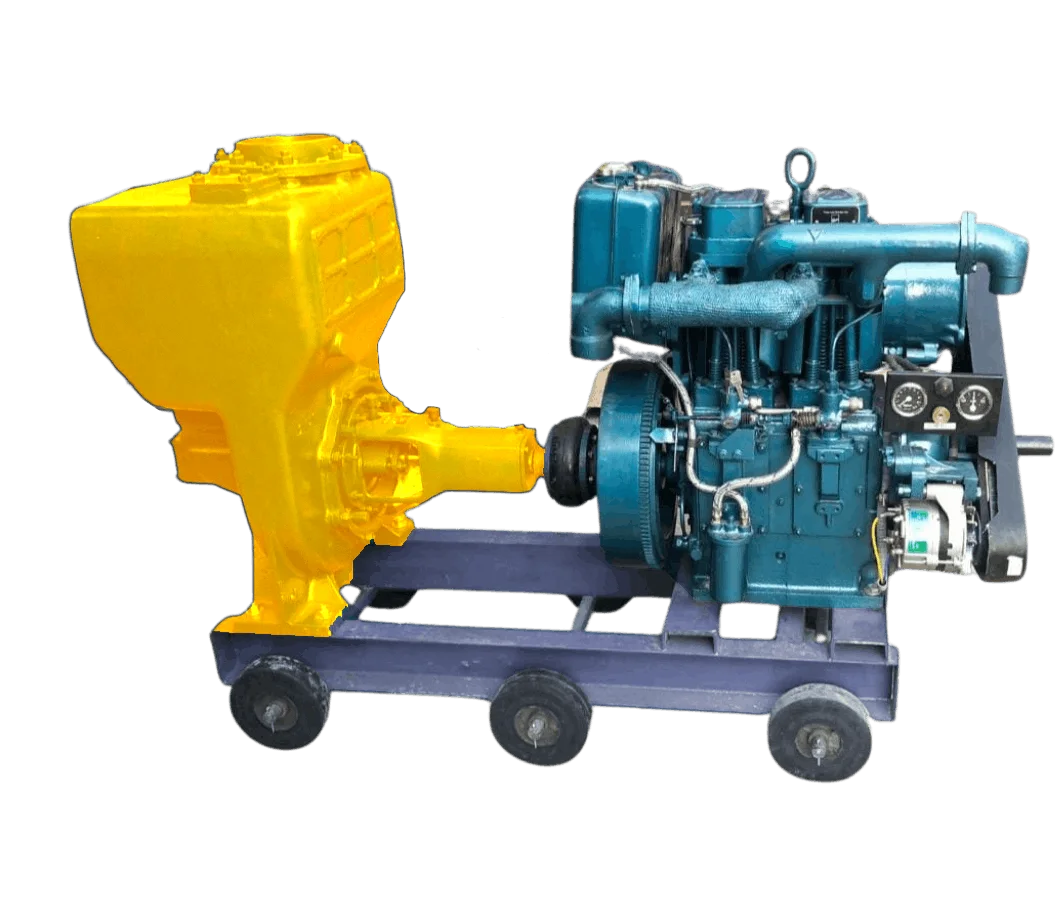
- Self-priming pumps have a specially designed volute casing that retains a water reserve even after the pump stops. On restart, this reserve mixes with air in the suction line and evacuates it through the discharge, priming the pump within 1–3 minutes without any manual intervention.
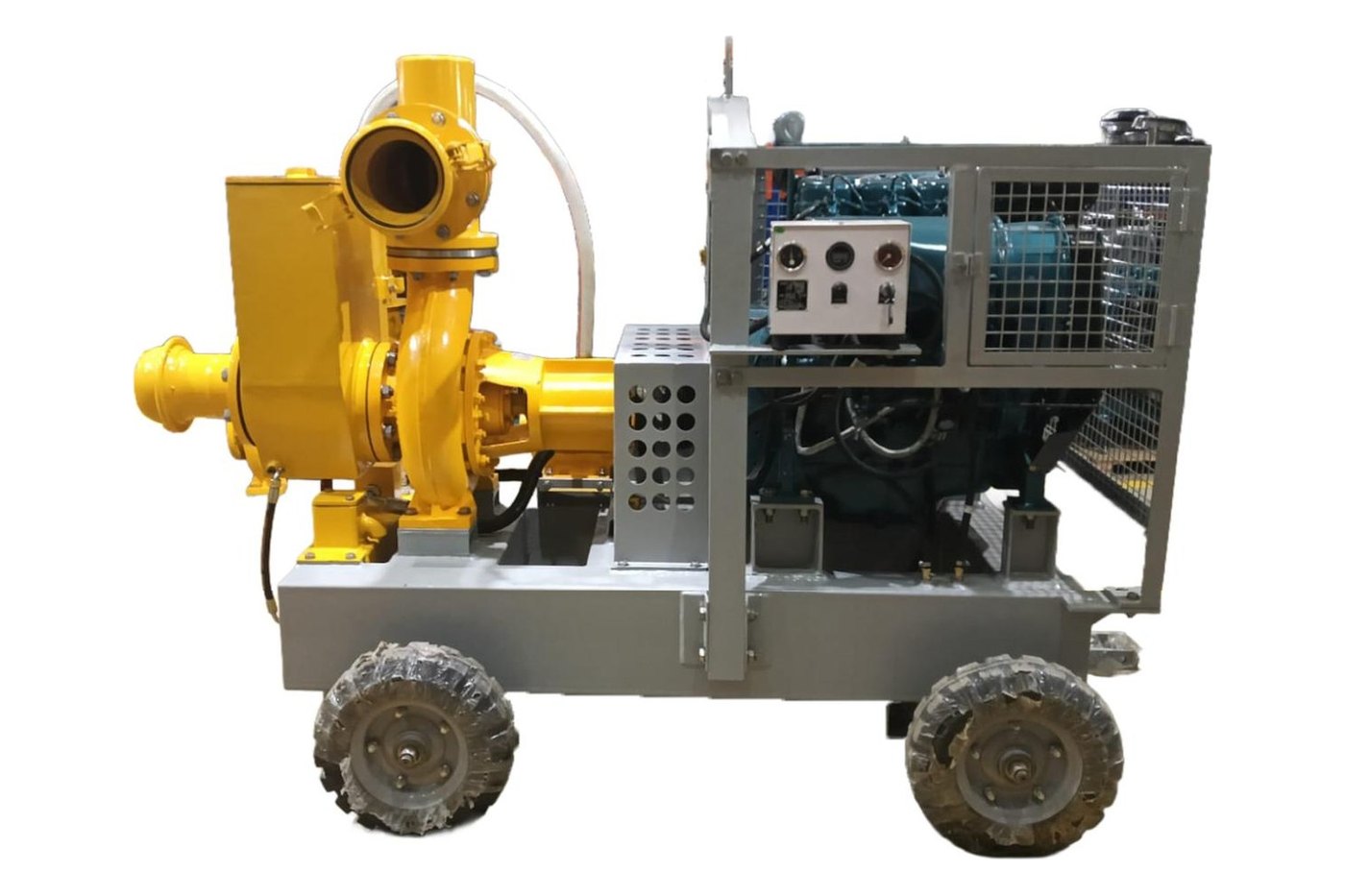
- Auto-prime pumps go one step further — they incorporate an integral vacuum priming system (typically an ejector or small vacuum pump) within the pump unit, so priming happens automatically and reliably every time, even from a completely dry suction pipe, and even at suction lifts that standard self-priming designs cannot handle.
Both types are purpose-built to save time, reduce labour, and make field operation simpler.
Cosmos Pumps manufactures both self-priming pumps and auto-prime pumps for dewatering, construction, and industrial use across India.
Common Priming Problems and How to Fix Them
Even when you follow correct priming procedures, certain problems regularly appear in the field. Here are the most frequent causes of priming failure and how to diagnose them.
Problem 1: Pump Loses Prime After Starting
Symptom: The pump primes correctly but loses flow after a few minutes of operation.
Causes:
- Air leak in the suction pipe joints or flange gaskets — even a small air leak at atmospheric pressure becomes a significant vacuum leak under suction, drawing in air continuously
- Failed or sticking foot valve allowing drawback between cycles
- Suction pipe partially blocked, causing the pump to cavitate and introduce vapour
Fix: Pressure-test suction pipe joints with soapy water while the pump is running. Check and replace the foot valve. Clear blockages from the suction strainer.
Problem 2: Pump Takes Too Long to Prime
Symptom: The pump takes more than 5 minutes to prime and sometimes never achieves full flow.
Causes:
- Suction pipe is too long or has too many bends, creating too large an air volume to displace
- Suction lift is excessive — beyond the pump’s rated self-priming capability
- Water level in the source has dropped, increasing effective suction lift
Fix: Shorten suction pipe or reduce bends. If suction lift regularly exceeds 6–7 metres, upgrade to an auto-prime pump or add an external vacuum priming system.
Problem 3: Pump Will Not Prime From Dry
Symptom: After the pump has been idle (overnight, over a weekend), it will not re-prime.
Causes:
- No foot valve fitted — water drains back from suction pipe when pump stops
- Self-priming water reserve in casing has evaporated or leaked out during idle period
Fix: Fit a foot valve. If using a self-priming pump, ensure the re-priming water reservoir in the casing is adequate. For sites with long idle periods and no foot valve, an auto-prime pump is the correct specification.
Problem 4: Pump Makes Noise But No Flow
Symptom: Pump motor sounds like it is running normally but delivers no water.
Causes:
- Air-bound (pump running on air — the impeller is spinning but cannot create pressure)
- Suction strainer blocked
- Pump rotating in wrong direction (particularly after rewiring or generator connection)
Fix: Stop the pump immediately. Check rotation direction — for most centrifugal pumps, the correct rotation is clockwise viewed from the drive end. Clear the strainer. Re-prime before restarting.
Self-Priming vs Auto-Prime Pumps: What’s the Difference?
This is the most common question buyers ask when specifying a pump for a site with suction lift conditions. Both pump types eliminate the need for manual priming, but they do so differently and have different performance limits.
| Feature | Self-Priming Pump | Auto-Prime Pump |
|---|---|---|
| Priming mechanism | Retained water reserve in casing mixes with air to evacuate suction pipe | Integral vacuum pump or ejector actively evacuates air on every start |
| Priming time | 1–3 minutes from moist casing | 30–90 seconds, even from dry suction pipe |
| Maximum suction lift | Typically 6–7 metres | Up to 8–9 metres (model dependent) |
| Re-priming after long idle | Requires water in casing to remain | Primes reliably even from dry |
| Maintenance | Foot valve recommended; check casing seal | Vacuum system requires periodic inspection |
| Typical applications | Construction dewatering, irrigation, mine sumps | Unmanned pumping stations, emergency response, difficult site conditions |
| Cost | Lower initial cost | Higher initial cost; lower site labour cost |
| Handles air-entrained liquid | Yes, well suited | Yes, excellent |
Which Should You Specify?
Choose a self-priming pump when:
- Site supervision is available during start-up
- Suction lift is reliably below 6 metres
- The pump will be restarted regularly (not sitting idle for weeks)
- Budget is the primary constraint
Choose an auto-prime pump when:
- The pump must restart automatically after power cuts
- Suction lift is at the high end (7–9 metres)
- The site is unmanned or difficult to access
- Downtime cost is high (construction programme delay, flooding risk)
- The suction pipe may drain dry during extended idle periods
Browse Cosmos Pumps’ range of auto-prime pumps or self-priming pumps to find the right specification for your application.
When to Use Each Type: A Practical Guide for Site Engineers
Construction Dewatering
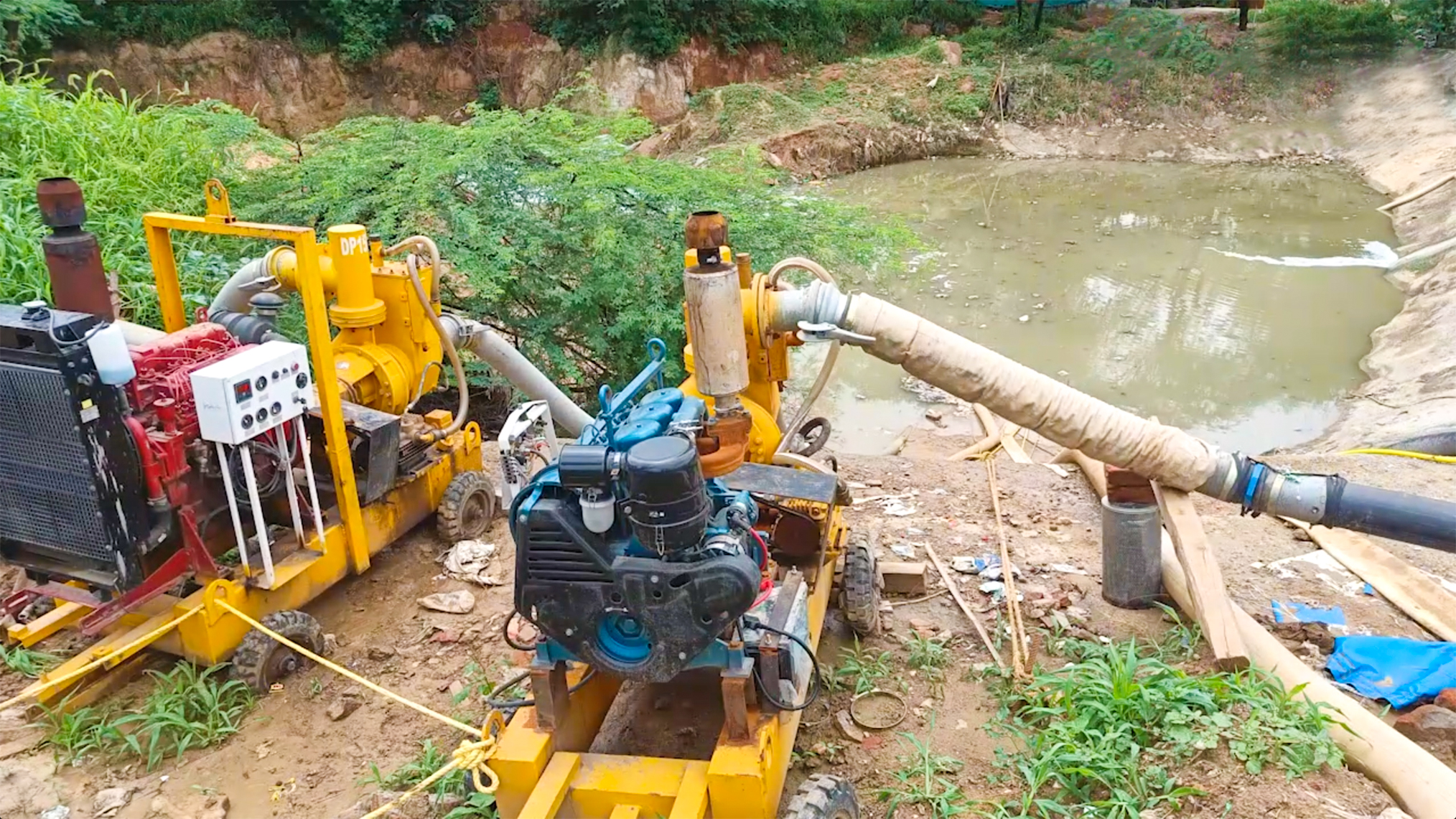
Construction dewatering is the most demanding priming environment. Sumps accumulate silt, water levels fluctuate, pumps start and stop frequently, and operators are rarely pump specialists.
Recommendation: Auto-prime or self-priming centrifugal pump, minimum 4-inch bore for meaningful flow rates. Fit a strainer on the suction inlet to prevent solids from reaching the impeller. Plan for suction lift to increase as the excavation deepens — specify a pump with headroom above the current lift requirement.
Agricultural Irrigation and Water Supply
Agricultural pumps often sit in a well or open water body. The suction pipe can drain when the pump is off, requiring fresh priming each morning or after rain delays.
Recommendation: A foot valve on the suction intake is the most cost-effective solution for intermittent agricultural use. If the foot valve is unreliable (silty water, abrasive conditions), upgrade to a self-priming pump to avoid daily priming downtime.
Industrial Process Applications
Industrial process pumps often need to handle liquids other than clean water — diesel, chemicals, slurries, or hot fluids. Priming is more complex because many of these liquids cannot be manually poured in, some liquids create vapour quickly, and operators may not be available at every start-up.
Recommendation: Vacuum priming systems or auto-prime designs. For corrosive or hazardous liquids, closed-system priming is essential to avoid spills.
Emergency Flood Response and Fire-Fighting
Speed is critical. Time spent priming is time during which flooding continues or fire spreads.
Recommendation: Auto-prime pumps only. The ability to deploy, connect, and start pumping in under two minutes is non-negotiable in emergency response.
Key Takeaways
- Priming in pumps is the process of displacing air from the pump casing and suction line with liquid before start-up. Without it, centrifugal pumps cannot operate.
- The four main priming methods are: manual priming, foot valve priming, vacuum/ejector priming, and self-priming/auto-prime pump designs.
- The most common causes of priming failure in the field are air leaks in suction piping, failed foot valves, and suction lifts that exceed the pump’s capability.
- Self-priming pumps use a water reserve in the casing to evacuate air. Auto-prime pumps use an active vacuum system and are more reliable under difficult conditions.
- For construction dewatering, industrial use, or emergency response in India, specifying a self-priming or auto-prime pump eliminates the most common cause of pump downtime on site.
Frequently Asked Questions
What is priming in pumps?
Priming in pumps is filling the pump casing and suction pipe with liquid before starting the pump. Centrifugal pumps cannot pump air — the impeller needs liquid to generate the pressure differential that moves fluid. Without priming, the pump runs dry and no flow is delivered.
Why does a centrifugal pump need to be primed?
A centrifugal pump’s impeller generates pressure by spinning liquid at high speed. Air is approximately 800 times less dense than water, so the impeller cannot develop enough pressure difference to draw air up the suction pipe. Priming replaces air with liquid so the pump can operate normally.
What happens if a pump is not primed?
If a centrifugal pump runs without priming (dry running), it delivers no flow, the pump casing and mechanical seal overheat within minutes, and the impeller can be damaged. Dry running is one of the leading causes of premature centrifugal pump failure.
What is the difference between a self-priming pump and an auto-prime pump?
A self-priming pump retains a small water reserve in its casing that mixes with air in the suction line on start-up to evacuate it, typically within 1–3 minutes. An auto-prime pump uses an integral vacuum system to actively evacuate air, priming reliably even from a dry suction pipe and at higher suction lifts, usually within 30–90 seconds.
How do I know if my pump has lost its prime?
Signs of a lost prime include: the pump running but delivering no flow or very low flow; unusual noise from the pump (high-pitched whine or cavitation noise); the discharge pressure gauge reading very low or zero; and the motor current running below the normal operating load.
Can all pumps self-prime?
No. Standard centrifugal pumps cannot self-prime — they must be filled with liquid before start-up. Only pumps specifically designed with a self-priming casing, or equipped with an auto-priming system, can evacuate air from the suction line on their own. Positive displacement pumps (diaphragm pumps, gear pumps, peristaltic pumps) are inherently self-priming because their displacement mechanism does not rely on centrifugal force.
About Cosmos Pumps
Cosmos Pumps Pvt. Ltd. has manufactured industrial pumps in India for decades, supplying dewatering, self-priming, and auto-prime pump solutions to construction companies, infrastructure contractors, mining operations, and industrial facilities across the country.
If you need help selecting the right pump specification for your project’s suction lift and flow requirements, contact our technical team for a no-obligation consultation.
- Browse self-priming pumps
- Browse auto-prime pumps
This article is for informational purposes for engineers, contractors, and procurement teams working with centrifugal pumps in construction, industrial, and agricultural applications.