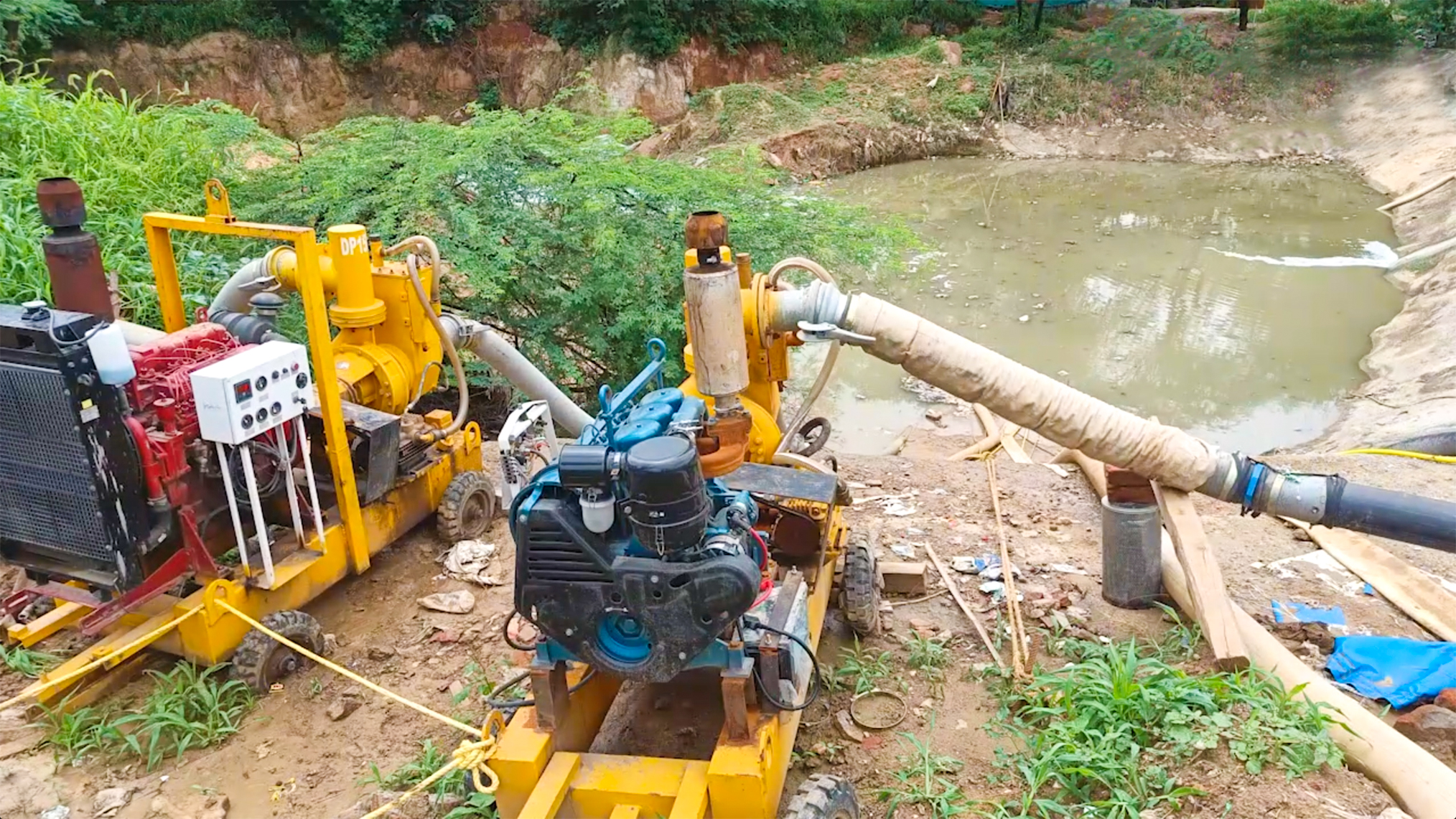
Water accumulation whether from rainfall, groundwater seepage or other sources pose a serious threat to construction activities by putting in danger safety of workers, stalling of construction or even compromising the integrity of the structure. In such a case, construction dewatering pump, can serve a vital role in the construction process.
A construction dewatering pump offers an effective solution for removing excess water and maintaining a dry work environment. So let’s dive into why construction dewatering pumps are important and how they play a major role in the success of construction projects. For an in-depth look at the core site dewatering methods, see our dedicated guide.
What is a dewatering pump?
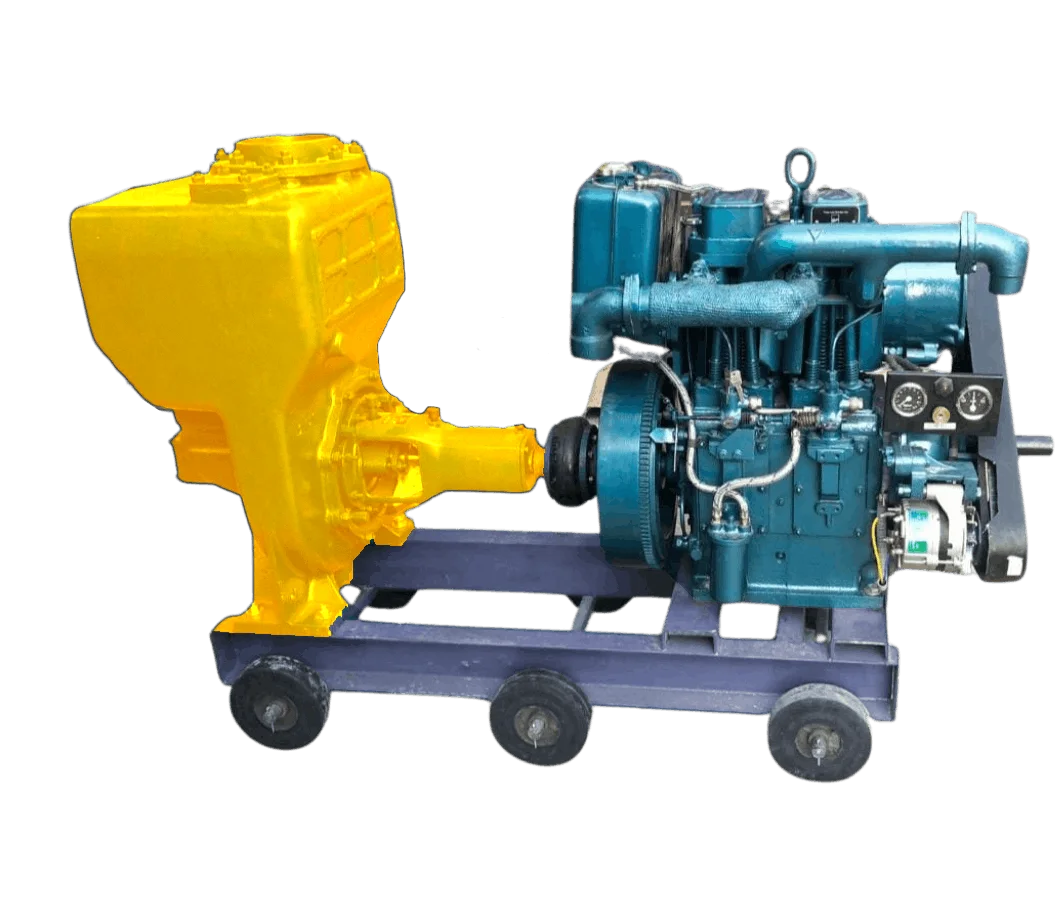
A dewatering pump is a specialized device used to remove excess water from excavations, construction sites, trenches, basements and other areas prone to water accumulation. They are widely used during construction activities. These pumps are used to prevent flooding, maintain dry working environments and ensure the stability and integrity of the structure.
Dewatering pumps are typically of two types, submersible and surface mounted, depending upon the application and depth of water. Submersible pumps are apt for deep excavations, basements and underwater use. They are installed directly into the water source.
On the other hand, surface mounted pumps are placed above the water level and are widely used in shallow excavation, surface water removal and trenches.
These pumps have powerful motors and impellers which can effectively and efficiently pump large volumes of water containing sand and mud.
They may also have additional features like agitators, automatic controls, variable speed settings etc. They may be made of special corrosion resistant materials according to difficult working environments.
Overall dewatering pumps are important tools to handle water accumulation and provide a dry working environment to construction workers and prevent construction structures against water damage. It provides stability and protects the integrity of construction structures.
What is slurry dewatering pump?
Slurry submersible pumps are designed to pump liquid containing solids and abrasive particles. Slurry dewatering pumps differs in design and manufacturing to adapt to different types of slurry, which varies in the concentration of solids, size of solid particles, shape of solid particles, and composition of solution types.
Why Should You Choose Cosmos Dewatering Pumps?
Cosmos dewatering pumps! We are not just another pump company, we are a brand! A brand with a vision. Vision of sustainability and innovation. Our team always strives to give our customers products that solve their problems. We started our journey in 2013 and now have become a popular brand providing effective solutions in fluid management. We have experience and expertise in diverse sectors including construction, infrastructure, municipal services, mining and hydroelectric projects across India and the globe.
Efficient products
We are committed to develop effective and efficient dewatering solutions. We also care about the environment and always consider sustainability.
Portable design
We understand the needs of our consumers and design our products accordingly. Our products are compact, lightweight so that they are easily transportable to the construction site.
Construction Dewatering Pump Selection Guide
Cosmos offers two primary pump families for construction dewatering. Choose based on site depth, power availability, and required flow rate:
| Pump Model | HP Range | Flow Rate | Shut-Off Head | Solids Capacity | Best Construction Application |
|---|---|---|---|---|---|
| CDW Submersible (Standard) | 1.5 – 50 HP | 450 – 8,500 LPM | 15.5 – 86.5 M | Up to 12 mm | Sump dewatering, trenches, foundation pits up to 30 M depth |
| CDW High Head Submersible | 5 – 75 HP | 350 – 2,200 LPM | 40 – 140 M | Up to 12 mm | Deep multi-storey basements, high-rise foundation excavations |
| CAP Auto-Prime Surface | 60 – 1,550+ HP | Up to 74,483 LPM | Up to 169 M | 15 – 75 mm | Large-scale site dewatering, diesel-driven, multi-point discharge |
Both CDW and CAP series handle dirty, muddy water (SG up to 1.1, pH 5–8). The CDW submersible dewatering pump is ideal where the pump must operate fully submerged in the pit. The CAP auto-prime pump suits surface-mounted, engine-driven applications where portability and high flow are priorities.
Construction Dewatering in Practice
Cosmos deploys over 300 dewatering pumps annually across construction sites in India. A representative deployment: a commercial building basement excavation in Delhi-NCR requiring 10–12 m drawdown over a 10-week construction window. The project used a combination of 5.5 HP CDW submersible pumps at four sump collection points, with a 60 HP CAP auto-prime unit handling the main discharge to the municipal drain — maintaining a dry working environment through active monsoon conditions.
For complex, multi-pump sites, Cosmos’ EPEC team handles pump selection, installation, O&M support and CosmoSmart™ IoT-based remote monitoring — so project engineers receive real-time dewatering data without on-site manual checks.
Frequently Asked Questions
What pump is best for foundation dewatering?
For foundation dewatering on construction sites, the Cosmos CDW submersible dewatering pump is the most common choice. Available from 1.5 to 50 HP with flow rates from 450 to 8,500 LPM, it handles dirty, muddy water with suspended solids up to 12 mm — typical of excavation sumps. For deep foundations requiring discharge heads above 30 M, the CDW High Head variant (40–140 M shut-off head) is recommended. Where grid power is unavailable, the diesel-driven CAP auto-prime pump delivers equivalent performance with up to 9.8 m suction lift and no external priming required.
Which dewatering pump is best for a construction site?
The best construction site dewatering pump depends on site conditions. For confined spaces — basement pits, utility trenches, floor slabs — a submersible dewatering pump (CDW series) sits directly in the sump and operates unattended. For high-inflow open excavations or sites without stable electricity supply, the auto-prime surface pump (CAP series) delivers flows up to 74,483 LPM with engine drive and is easily relocated as the excavation progresses.
How do I choose between a submersible and a surface pump for construction dewatering?
Use a submersible pump when the pump must be placed inside the excavation, electricity is available, or multiple small sumps each need their own pump. Use a surface auto-prime pump when you need engine-driven operation (no grid power), high portability between dewatering points, or very high flow rates from a single unit. Cosmos’ technical team can assist with selection based on excavation depth, water inflow rate, and discharge distance.
Can I rent a dewatering pump for my construction project?
Yes. Cosmos offers dewatering pump rentals with a fleet of 500+ submersible pumps (3–75 HP) and 50+ auto-prime pumps (60–105 HP). Rental includes zero capital outlay, no maintenance cost, immediate availability, and Pan India coverage — ideal for project-duration deployment. Contact us for rental availability at your site.
View Submersible Pumps View Auto-Prime Pumps
For a full overview of our construction dewatering solutions — including pump selection guides, representative project case studies, and rental options — visit our dedicated Building Construction Segment page.