Choosing the right HP for a dewatering pump depends on three site parameters: the required flow rate (LPM or m³/h), the total dynamic head (TDH in metres), and available power supply. Match these three variables to the correct model — CDW submersible (1.5–120 HP), CAP diesel auto-prime (60–105 HP), or CSP self-priming (up to 30 HP) — and you size the pump correctly on the first attempt.
This guide covers the complete Cosmos Pumps HP range across all three dewatering product lines, with a full HP selection table, an application-by-HP quick-reference, and a site HP calculation formula for engineers who need to verify motor sizing before procurement.
How to Choose the Right HP for a Dewatering Pump
Selecting HP for a dewatering pump is a two-step process:
Step 1 — Calculate required hydraulic power: Use the formula HP = (Q × H) / (3,960 × η) where Q = flow in US GPM, H = total head in feet, and η = pump efficiency (typically 0.60–0.75 for dewatering pumps). See the worked example in the HP Calculation section below.
Step 2 — Match to model range: Once you have the minimum hydraulic HP, select the next available commercial HP above that value. For submersible applications, choose from the CDW Standard (1.5–50 HP) or CDW High Head / Ultra High Head series. For surface pump applications with no power supply, select CAP auto-prime (60–105 HP diesel). For trench and foundation work with available suction head, select CSP self-priming (up to 30 HP).
General rules of thumb for Indian construction and infrastructure projects:
- Small sumps (basements, residential pits) → 1.5–3 HP
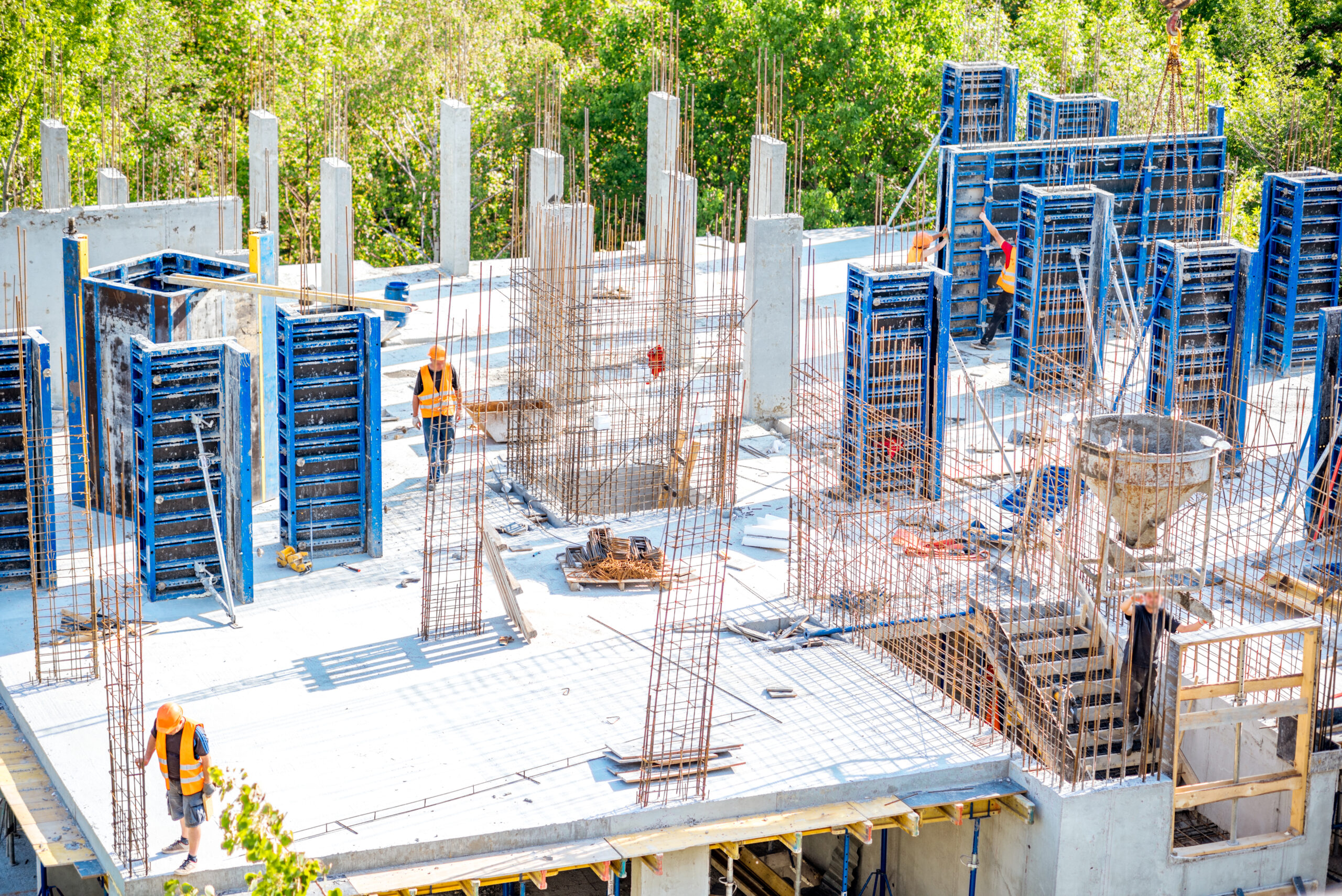
- Active construction sites (flooded excavations, piling sumps) → 5–10 HP
- Tunnels and mine shafts → 50 HP and above, often series pump configuration
- Remote or off-grid sites → CAP diesel auto-prime (60–105 HP range)
CDW Submersible Dewatering Pump — Full HP Table (1.5 HP to 120 HP)
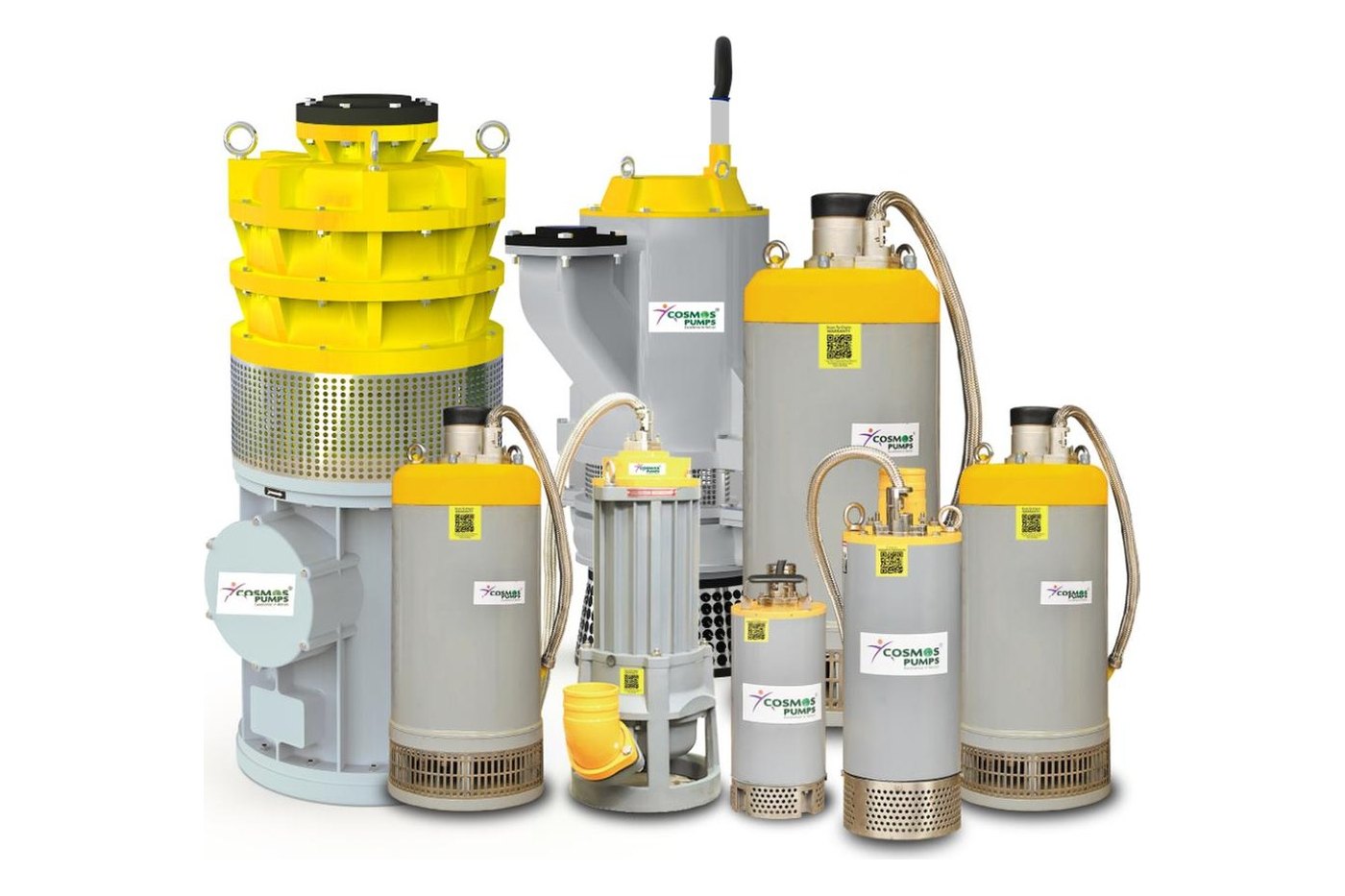
Cosmos Pumps manufactures three CDW submersible series spanning 1.5 HP to 120 HP. The correct series depends on the shut-off head (TDH) at your site.
For the complete submersible dewatering pumps range including CDW, CNC, CSW, and CSL models, visit the Cosmos Pumps product catalogue.
CDW Standard — for heads up to 86.5 M
| HP | Flow Range (LPM) | Shut-off Head (M) | Best Application |
|---|---|---|---|
| 1.5 HP | 450–800 | 15–22 | Basement leakage, small residential sumps |
| 2 HP | 600–1,100 | 18–28 | Trench dewatering, residential construction |
| 3 HP | 900–1,800 | 22–38 | Construction site sumps, flooded pits |
| 5 HP | 1,200–2,800 | 28–52 | Medium construction, foundation dewatering |
| 7.5 HP | 2,000–4,200 | 38–65 | Large excavations, civil infrastructure |
| 10 HP | 2,800–5,500 | 45–75 | Flood control, metro station sumps |
| 15 HP | 3,500–6,500 | 52–80 | Heavy civil, highway dewatering |
| 20 HP | 4,500–7,500 | 58–84 | Large civil projects, dam dewatering |
| 30 HP | 6,000–8,000 | 65–86 | Industrial sumps, power plant cooling |
| 50 HP | 7,500–8,500 | 72–86.5 | Largest construction and EPC projects |
Water type: Dirty/muddy water, suspended solids 4–12 mm, SG up to 1.1, pH 5–8. These are indicative performance ranges — confirm exact duty point with Cosmos Pumps engineering team before finalising specification.
CDW High Head — for heads 40 M to 140 M
The CDW High Head range is the correct choice when the pumping head exceeds 40 M — typically in tunnel shaft dewatering, deep building basements (B3 and below), and hillside civil projects.
| HP | Flow Range (LPM) | Shut-off Head (M) | Best Application |
|---|---|---|---|
| 5 HP | 350–700 | 40–65 | Deep basements, metro box construction |
| 7.5 HP | 500–900 | 48–80 | Tunnel drainage shafts, bridge abutments |
| 10 HP | 700–1,200 | 55–95 | Hydro project dewatering, hill infrastructure |
| 15 HP | 900–1,500 | 65–110 | Medium tunnel phases, dam bypass |
| 20 HP | 1,100–1,800 | 75–120 | Railway tunnel invert works |
| 30 HP | 1,400–2,000 | 85–130 | Deep mine drainage |
| 50 HP | 1,800–2,200 | 100–140 | High-head mine and tunnel extraction |
| 75 HP | 1,900–2,200 | 115–140 | Maximum single-stage high head duty |
CDW High Head: 4–12 mm solids, SG up to 1.1, pH 5–8. All values indicative — verify with Cosmos technical data sheet.
CDW Ultra High Head — for heads 90 M to 200 M
For deep mine dewatering, metro tunnel drives, and hydro-electric powerhouse sumps where TDH exceeds 90 M, the CDW Ultra High Head (50–120 HP) with 2-stage SS316 impellers is the correct specification.
| HP | Flow Range (m³/h) | Shut-off Head (M) | Best Application |
|---|---|---|---|
| 50 HP | 50–100 | 90–130 | Mine shaft bottom level, deep tunnel |
| 75 HP | 80–150 | 110–160 | Underground coal mine drainage |
| 100 HP | 120–180 | 140–180 | Metro tunnel main drive face |
| 120 HP | 160–200 | 160–200 | Deepest mine sumps, hydro projects |
CDW Ultra High Head: Class H insulation (180°C), Dual SiC mechanical seals, SS431 shaft, Viton seals for saline/abrasive tolerance. Vertical and horizontal installation. 20 m power cable standard.
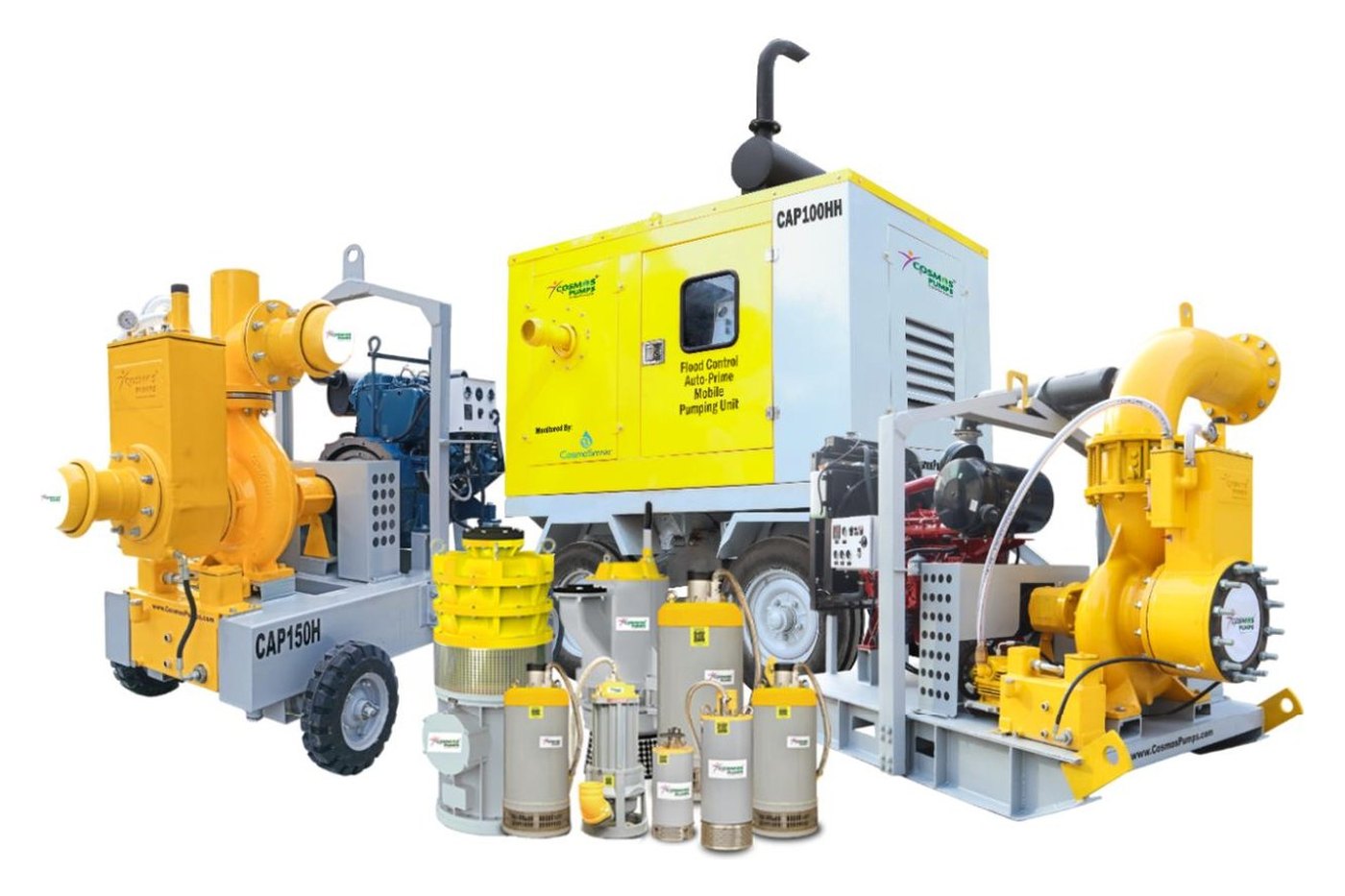
CAP Auto-Prime Diesel Surface Pump — 60–105 HP
When there is no electrical supply on site — remote mine locations, greenfield construction zones, flood emergency response — the CAP auto-prime pumps are the correct selection. The CAP range is engine-driven (no grid power required), self-primes from up to 9.8 M suction lift, and runs dry without damage.
CAP HP range for dewatering
| HP Range | Engine Options | Mounting | Best Application |
|---|---|---|---|
| 60–65 HP | KOEL, Eicher | Small trolley | Construction site main pumps, flood control |
| 75–80 HP | KOEL, Eicher, Baudouin | Small/heavy trolley | Medium flood response, remote dewatering |
| 100–105 HP | Baudouin, CAT | Heavy trolley, canopy | Mining, large infrastructure, long-duration duty |
Key CAP advantages for HP selection decisions:
- No grid power: Full-load duty on diesel with KOEL, Eicher, Baudouin, or CAT engines
- High solids tolerance: Closed impeller handles 15 mm solids; open impeller handles 75 mm solids
- Portability: Small trolley (100 m–1 km site moves) or heavy trolley (mining roads)
- Rental available: Cosmos operates a fleet of 50+ CAP units (60–105 HP) for pan-India project rental
- Flow capacity: CAP range delivers up to 4,469 m³/h at maximum configuration — significantly higher than any submersible option
CAP is NOT the correct choice when: (a) the pump must be submerged, (b) pumping sewage or slurry (use CSW or CSL instead), or (c) the project has reliable electrical supply and space constraints on surface.
CSP Self-Priming Surface Pump — Up to 30 HP
For trench dewatering, basement pit pumping, and foundation works where a suction head is available (pump above water level), the CSP self-priming surface pump (up to 30 HP) offers a compact, motor-driven alternative to submersibles.
| HP | Shut-off Head (M) | Flow (LPM) | Application |
|---|---|---|---|
| Up to 30 HP | 28 | Up to 4,500 | Infra/construction, trenches, pits, flood waterlogging, chemical effluents, sewage bypass |
When to choose CSP over CDW submersible:
- Suction head available (pump does not need to be immersed)
- Electrical supply available at surface
- Space in sump too tight for submersible installation
- Chemical effluent duty (CSP handles pH ranges beyond CDW specification)
Application-by-HP Quick Reference
| Application | Recommended HP | Pump Type | Notes |
|---|---|---|---|
| Basement leakage (residential/commercial) | 1.5–3 HP | CDW Standard | Short duty cycles; auto-float switch recommended |
| Construction site general dewatering | 5–10 HP | CDW Standard | Multiple units for large excavation areas |
| Foundation piling sumps | 5–15 HP | CDW Standard or CSP | Depends on sump depth and TDH |
| Tunnel drainage shaft (rail/highway) | 10–50 HP | CDW High Head | Series staging for TDH >80 M |
| Metro tunnel active face | 50–100 HP | CDW Ultra High Head | Two-stage impeller; SS316 for saline/abrasive |
| Open-pit mine dewatering | 50–120 HP | CDW Ultra High Head | Series or parallel configuration based on TDH |
| Remote/greenfield site, no power | 60–105 HP | CAP diesel | KOEL or Baudouin engine; rental fleet available |
| Flood control (municipal/urban) | 60–105 HP × multiple units | CAP diesel | Pan-India rapid-response rental available |
| Wellpoint system header pump | 30–75 HP | CAP or CSP | Depends on header pipe size and wellpoint count |
HP Calculation Formula — Site Example
Standard hydraulic HP formula:
HP = (Q × H) / (3,960 × η)
Where:
- Q = flow rate in US gallons per minute (1 LPM = 0.264 US GPM)
- H = total dynamic head in feet (1 metre = 3.281 feet)
- η = pump efficiency (use 0.65 as a conservative estimate for dirty-water dewatering pumps)
Worked example — construction site sump:
A contractor needs to dewater a foundation pit. The sump holds 50,000 litres and must be emptied within 4 hours to maintain a 6-hour work cycle. The discharge pipe runs 45 M vertically before reaching the settling tank.
- Required flow: 50,000 L ÷ 4 hours = 12,500 LPH = 208 LPM = 55 US GPM
- TDH: 45 M static head + 5 M pipe friction = 50 M = 164 feet
- Minimum HP: (55 × 164) / (3,960 × 0.65) = 9,020 / 2,574 = 3.5 HP minimum
→ Select 5 HP CDW Standard (next commercial size above 3.5 HP; provides operational reserve).
Per Bureau of Energy Efficiency (BEE India) pump efficiency guidelines, always apply a 25–30% safety factor above calculated minimum HP to account for wear, start-up load, and varying site conditions. Source: BEE India Pump Efficiency Manual.
For Indian Standard pump testing methodology, refer to BIS IS 9137 (Acceptance Tests for Centrifugal, Mixed-Flow and Axial Pumps).
View the Full Cosmos Pumps Dewatering Range
For model-specific technical data sheets, full performance curves, and CDW series comparison:
- Submersible dewatering pumps — full CDW, CNC, CSW, CSL range
- CDW High Head range — 5–75 HP, 40–140 M head
- CDW Ultra High Head — 50–120 HP, 90–200 M head
- CAP auto-prime pumps — diesel, 60–105 HP, up to 9.8 M suction lift
For project-specific HP selection support, contact the Cosmos Pumps technical team.
Frequently Asked Questions: Dewatering Pump HP Selection
What HP pump is needed for basement dewatering?
For most residential and commercial basement dewatering applications in India, a 1.5 HP to 3 HP CDW submersible dewatering pump is sufficient. A 1.5 HP CDW delivers 450–800 LPM at heads up to 22 M, which covers most single-basement pit depths. For B2 and B3 basement levels (deeper than 6 M sump depth), step up to 2 HP or 3 HP to maintain adequate flow at the higher TDH. Install with an auto-float switch to prevent dry-running on intermittent leakage.
What HP dewatering pump is recommended for a construction site?
For a typical active construction site with a flooded excavation or piling sump, 5 HP to 10 HP CDW submersible dewatering pumps are the standard specification. A 5 HP CDW delivers 1,200–2,800 LPM at heads up to 52 M; a 10 HP unit delivers 2,800–5,500 LPM at up to 75 M head. Larger excavation areas or basement box-cuts may require multiple 5–10 HP units running in parallel rather than a single high-HP pump, which gives operational redundancy and easier maintenance access in confined spaces.
What is the difference between a 5 HP and 10 HP dewatering pump?
The primary difference is flow capacity and head range. A 5 HP CDW submersible handles 1,200–2,800 LPM at up to 52 M shut-off head, while a 10 HP unit handles 2,800–5,500 LPM at up to 75 M. For the same application, the 10 HP unit empties a sump approximately twice as fast but draws double the electrical load (typically 3-phase 415 V). Choose 5 HP for confined sumps or sites with limited power supply; choose 10 HP where faster cycle times or higher TDH are required.
How do I calculate the HP required for a dewatering pump on site?
Use the formula: HP = (Q × H) / (3,960 × η), where Q = required flow in US GPM, H = total dynamic head in feet, and η = pump efficiency (use 0.65 for dirty water). Convert LPM to US GPM by multiplying by 0.264; convert metres to feet by multiplying by 3.281. Add a 25–30% safety margin to the calculated result and select the next standard commercial HP above that figure. Always verify against the pump’s published performance curve at the specific duty point.
What is the most common HP for dewatering pumps in India?
The 5 HP dewatering pump is the most widely deployed size across Indian construction and infrastructure projects. It offers the right balance of flow capacity (1,200–2,800 LPM), portability, and three-phase 415 V power compatibility for typical site electrical supply. For rental applications, 7.5 HP and 10 HP units are also common across larger EPC and flood-control contracts. The 1 HP to 3 HP range is predominantly used for residential construction and smaller commercial basement applications.
Can a 1 HP dewatering pump handle a flooded trench?
A 1 HP submersible dewatering pump can handle a small flooded trench provided the flow requirement does not exceed approximately 600 LPM and the head (depth of sump to discharge point) is below 18–20 M. For a typical utility trench (0.5–1.5 M deep, 10–50 M long), 1.5 HP to 2 HP is generally the minimum practical size because actual field efficiency rarely matches rated maximum flow, and solids loading reduces effective capacity. For active inflow conditions (running groundwater, monsoon seepage), step up to 3 HP minimum.
What HP is required for mine dewatering?
Mine dewatering HP requirements vary significantly by mine depth and inflow rate. As a general guide: shallow open-pit mines (less than 30 M depth) use 10–30 HP CDW Standard units in sump-and-pump configuration. Underground mines at 30–100 M depth require CDW High Head (10–75 HP) to manage TDH. Deep mines exceeding 100 M depth require CDW Ultra High Head (50–120 HP), often in series relay pump configurations where a shaft-bottom pump delivers to a mid-shaft sump, and a second pump lifts to surface. For remote mine sites with no grid power, CAP diesel auto-prime (60–105 HP) is the standard specification.
Is a diesel dewatering pump better than an electric one?
Neither is universally better — the choice depends on site conditions. Electric dewatering pumps (CDW submersible, CSP self-priming) are lower operating cost per hour, require no fuel logistics, and are quieter — making them the default choice for urban construction and sites with grid supply. Diesel auto-prime pumps (CAP range) are essential when there is no reliable electrical supply, when the pump must operate unattended for extended periods (flood duty, remote mining), or when very high flow rates are needed at a portable single unit. Many large Indian infrastructure projects use electric submersibles for ongoing sump duty and diesel auto-prime for emergency standby or initial dewatering at project start-up.
For project-specific HP sizing, contact Cosmos Pumps via WhatsApp (+91 99333 22238). Cosmos Pumps Pvt. Ltd. is ISO and CE certified, manufacturing dewatering pumps at our Faridabad, Haryana facility since 2021. Rental fleet of 500+ submersible and 50+ auto-prime units available pan-India.