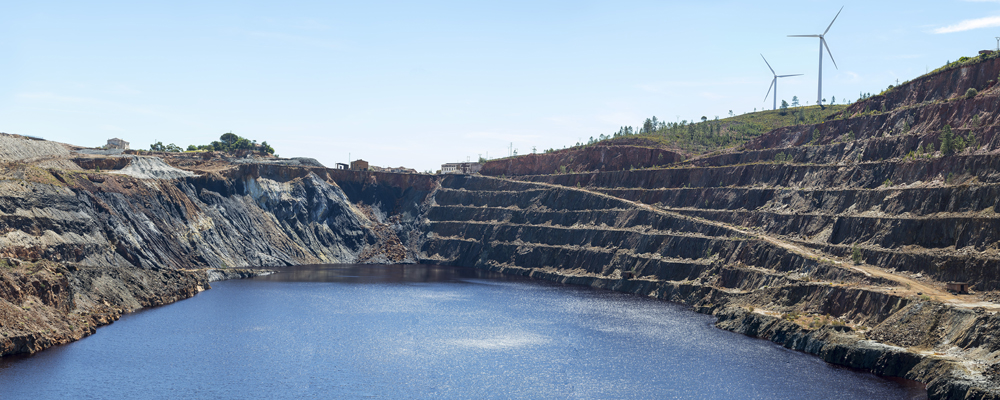
Efficient Dewatering Solutions For Mines
Mining sites demand the most rigorous dewatering performance in any industrial sector. Managing groundwater at 150 metres depth in an underground coal shaft, draining a monsoon-flooded open pit in 24 hours, or handling high-SG slurry from a coal washery — each scenario requires a different pump choice. Select the wrong pump and the result is downtime, accelerated wear, and regulatory non-compliance under DGMS norms.
Cosmos Pumps supplies purpose-built mine dewatering pump solutions for every mining sub-segment: CDW Ultra High Head submersibles for deep underground sumps (90–200M), CDW High Head for open pit relay systems (40–140M), CSL Hi-Chrome slurry pumps for mine tailings and coal runoff, and CAP Auto-Prime engine-driven pumps for remote surface dewatering where grid power is unavailable. With 50+ mining projects per year through our rental fleet and full EPEC commissioning capability, mine dewatering is one of Cosmos Pumps’ core service specialisations.
Get a Mine Dewatering Quote — Call / WhatsApp: +91 99333 22238
What Is Mine Dewatering?
Mine dewatering is the controlled removal of groundwater, surface runoff, and process water from active mining operations — open pit mines, underground workings, and quarries — to maintain safe working conditions, protect structural stability, and prevent ore dilution.
Without effective mine dewatering:
- Ore grade falls — water ingress into storage sumps dilutes ore concentration and increases downstream processing costs
- Structural risk increases — excess groundwater raises hydrostatic pressure on pit walls and tunnel linings, increasing the risk of slope failure and roof collapse
- Operations stop — a flooded sump shuts a working face; a poorly sized pump that cannot keep pace with monsoon inflow can halt production for days
In India, mine dewatering is also a statutory requirement. The Directorate General of Mines Safety (DGMS) mandates that underground coal and metal mines maintain documented pump capacity — including standby units — sized for maximum expected groundwater inflow, including monsoon peak rates. For the current regulatory framework, refer to the DGMS official website.
Mine Dewatering Pumps — CDW Ultra High Head for Deep Mines
The CDW Ultra High Head submersible mine dewatering pump is the standard specification for underground mine dewatering in coal mining, iron ore extraction, open-pit groundwater control, and deep quarry sump applications across India. Rated at 50–120 HP with 90–200 m shut-off head, it handles the combined static head and friction losses of deep underground mine sumps where single-stage pumps reach their design limit.
| Specification | CDW Ultra High Head |
|---|---|
| Power Range | 50–120 HP |
| Shut-Off Head | 90–200 m |
| Flow Rate | 50–200 m³/h (833–3,333 LPM) |
| Material of Construction | SS316 2-stage impeller; CI FG 300 motor body |
| Specific Gravity (SG) | Up to 1.1 |
| Solids Handling | 4–12 mm particle size |
| Shaft Material | SS431 high-torsional-strength |
| Mechanical Seals | Dual SiC vs SiC + oil seal |
| Insulation Class | Class H (180°C) with thermal sensor |
| Installation Orientation | Vertical and horizontal |
| Power Cable | 20 m factory cable (eliminates mid-shaft splices) |
| Motor Body | Naturally cooled; anti-corrosive SS316 strainer |
Mine dewatering applications: coal mining underground sump dewatering, iron ore open-pit groundwater control, underground mine sump relay configurations, limestone quarry pit dewatering, open-pit perimeter groundwater management. The 20 m factory cable eliminates the high-failure-risk cable splices that degrade reliability in deep shaft environments. Horizontal installation capability serves decline tunnels where a vertical sump is not always practical. For mine tailings and coal runoff sumps with SG above 1.1 and solids up to 70% by weight, see the CSL Hi-Chrome slurry pump. For tunneling, hydropower, and metro excavation dewatering, see tunneling dewatering applications.
Cosmos Dewatering Products for Mining Operations
Cosmos manufactures four distinct pump types that cover every mine dewatering duty — from very high head deep sump pumping to surface water management and slurry transfer.
CDW Ultra High Head — Deep Mine Dewatering (90–200M)
The CDW Ultra High Head submersible is the primary pump for underground mine sumps and very high-head open pit dewatering where standard high-head pumps cannot reach.
| Specification | CDW Ultra High Head |
|---|---|
| Shut-Off Head | 90 M – 200 M |
| Flow Rate | 50 – 200 m³/h |
| Power Range | 50 – 120 HP |
| Water Type | Dirty/muddy water; solids 4–12 mm; SG up to 1.1; pH 5–8 |
| Motor Body | CI FG 300 |
| Wetted Parts | SS316 2-stage impeller; SS431 shaft |
| Mechanical Seals | Dual SiC vs SiC + oil seal |
| Insulation | Class H (180°C) with built-in thermal sensor |
| Power Cable | 20 m (reduces cable splices in shaft installations) |
| Installation | Vertical and horizontal |
Why it works in underground mining:
- Vertical + horizontal installation — the pump can be lowered down a mine shaft vertically or installed in a sump tunnel horizontally, giving flexibility for different mine layouts
- 20m factory cable — eliminates the highest-failure-risk point (the cable splice joint) in shaft applications
- Thermal sensor — automatic motor cut-out before overheating during 24/7 continuous sump duty; prevents winding failure in high-ambient-temperature underground environments
- Dual SiC mechanical seals — silicon carbide vs silicon carbide seals tolerate the abrasive fine particles typical of Indian hard-rock and coal mine groundwater
- SS431 shaft — high-torsional-strength alloy handles the sustained torque load of continuous 90–200M head pumping without shaft fatigue
Suited for: coal sector EPC contractor sumps, underground metal mines (iron ore, lead-zinc, manganese, copper), deep quarry pit sumps requiring relay pumping above 90M.
CDW Ultra High Head mine dewatering pump — full specifications →
CSL / CSL-TV Slurry Pump — Mine Tailings & Coal Runoff Sumps
Standard dewatering pumps fail rapidly in mine slurry applications. Coal particle abrasion, high specific gravity, and 24/7 sump duty combine to destroy standard impellers in weeks. The CSL Hi-Chrome slurry submersible is built specifically for these conditions.
| Specification | CSL / CSL-TV |
|---|---|
| Shut-Off Head | 27.5 M – 52.5 M |
| Flow Rate | 1,584 – 5,834 LPM |
| Power Range | Up to 100 HP |
| Solids Handling | Up to 70% by weight; 70 mm particle size |
| Specific Gravity | Up to 2.1 |
| MOC — Impeller & Volute | 27% Hi-Chrome (ASTM A532 Class III) |
| CSL-TV Variant | Twin-volute; reduced radial bearing load; 3,500+ hour bearing life for 24/7 duty |
Why CSL for mining slurry:
- 27% Hi-Chrome MOC — the hardest chrome iron grade available in submersible slurry pumps; resists iron ore slurry, coal particles, and quarry aggregate abrasion that would erode standard alloys in weeks
- SG up to 2.1 — handles the densest mine tailings and coal washery slurries without cavitation or impeller damage
- CSL-TV twin-volute — balances hydraulic radial loads on the shaft, extending bearing life to 3,500+ hours in continuous 24/7 duty — critical for coal washery applications where shutdowns are costly
Suited for: Coal washery runoff sumps, iron ore tailings pits, sand and gravel quarry slurry handling, coal mine surface water with high fines loading.
The CSL slurry pump product page is being updated with full technical content. Contact Cosmos for CSL specifications and availability.
CDW High Head — Open Pit Perimeter Dewatering (40–140M)
The CDW High Head submersible covers the mid-range mine dewatering duty: open pit perimeter sump management, stepped relay pumping configurations, and quarry groundwater below 40M depth where standard dewatering pumps cannot reach.
| Specification | CDW High Head |
|---|---|
| Shut-Off Head | 40 M – 140 M |
| Flow Rate | 350 – 2,200 LPM |
| Power Range | 5 – 75 HP |
| Water Type | Dirty/muddy water; solids 4–12 mm; SG up to 1.1 |
Mining applications:
- Stepped pit relay pumping — CDW High Head in the lower sump (40–140M head), CDW Standard in the intermediate sump, with surface discharge at the top. Relay pumping is the standard approach for open pit mines deeper than 100M
- Perimeter groundwater management — iron ore open pit operations where perimeter sump TDH is 50–120M
- Quarry sump dewatering — where groundwater is clear to moderately turbid (for high-solid quarry slurry, use CSL)
CDW High Head dewatering pump — specifications and HP range →
CAP Auto-Prime — Remote Surface Dewatering & Emergency Mine Flooding
The CAP Auto-Prime engine-driven surface pump is the first choice for open pit surface water management, greenfield mine sites without grid power, and emergency mine flooding response where deployment speed is critical.
| Specification | CAP Auto-Prime (Rental Fleet) |
|---|---|
| Head Range | Up to 169 M |
| Flow Rate | Up to 74,483 LPM (4,469 m³/h) |
| Power (Fleet) | 60–105 HP |
| Suction Lift | 9.8 m (auto-prime) |
| Engine Options | KOEL · Eicher · Baudouin · CAT |
| Solids (Open Impeller) | 75 mm |
| Mounting | Small trolley / Heavy-duty trolley / Base frame / Canopy |
Why CAP for mining:
- Engine-driven — no electricity required; the right choice for remote greenfield mine sites and temporary operational areas where grid power is not yet available
- Auto-prime — primes in under 2 minutes without manual intervention; can run dry without motor damage during pit pump-down cycles
- Heavy-duty trolley — engineered for mine road conditions: rough terrain, loose aggregate surfaces, and site relocation without a crane
- 50+ pump rental fleet — Cosmos carries 50+ CAP pumps (60–105 HP) available for emergency mine flooding response with 24–48 hour Pan-India deployment
Application Guide — Open Pit vs Underground vs Quarry
The correct mine dewatering pump selection depends on your mining context, depth, and the nature of the water being pumped. Use this reference table to match your mine type to the right Cosmos pump:
| Mining Context | Primary Challenge | Recommended Pump | Head Range | Key Notes |
|---|---|---|---|---|
| Open Pit (surface runoff) | High flow, moderate head, no grid power | CAP Auto-Prime | 40–100M | Engine-driven; heavy trolley for mine road access |
| Open Pit (deep groundwater sump) | Moderate–high head, clear water | CDW High Head | 40–140M | Relay pump if TDH exceeds 140M |
| Underground Sump (coal / metal mines) | Very high head, confined shaft, 24/7 | CDW Ultra High Head | 90–200M | Horizontal installation option for sloped sump tunnels |
| Quarry (clean groundwater) | Variable depth, seasonal inflow | CDW High Head | 40–140M | Seasonal rental available |
| Quarry / Mine Tailings (slurry) | Abrasive solids, SG >1.1 | CSL / CSL-TV | 27.5–52.5M | 27% Hi-Chrome MOC required; CSL-TV for 24/7 duty |
| Coal Runoff Sump | High fine-coal solids, continuous 24/7 | CSL-TV | 27.5–52.5M | Twin-volute for extended bearing life at continuous load |
| Emergency Mine Flooding | Very high flow, 24–48h deployment | CAP rental fleet | Variable | 500+ pump fleet; Pan-India emergency response |
Cosmos Mining Credentials
Cosmos Pumps has been deploying dewatering equipment for mining operations since 2013. Our mining track record spans the full range of Indian and export mining contexts:
- 50+ mining projects per year — rental fleet deployments across coal, iron ore, quarrying, limestone, and sand mining operations
- EPEC capability — complete Engineering, Procurement, Execution, and Commissioning for mine dewatering systems. 250+ projects commissioned across all industrial sectors including mining
- ISO and CE certified — CDW Ultra High Head, CDW High Head, and CSL ranges all carry ISO and CE certification
- Pan-India service network — manufactured in Faridabad NCR with nationwide deployment and service coverage
- International mining exports — mine dewatering pumps supplied to mining operations in Nigeria, Zambia, South Africa, the Democratic Republic of Congo, and other mining markets
Case Study
A coal sector EPC contractor engaged Cosmos Pumps for continuous sump dewatering at 120M depth in an underground coal mine in Jharkhand. Three CDW Ultra High Head pumps (75 HP each) were deployed in a relay configuration — one primary, one intermediate relay, one standby — achieving continuous dewatering for 8 months across both monsoon and dry seasons. CosmoSmart IoT monitoring provided real-time runtime and service alerts, allowing the contractor’s site management team to track all three pumps remotely without permanent on-site engineering staff.
This case study represents a typical deployment scenario. Contact Cosmos Pumps for verified project references from our mining client portfolio.
Mine Dewatering Rental — Zero Capital Risk
For mine contractors managing seasonal inflow, emergency flooding events, or short-duration mining licences where capital pump purchase is not justified, Cosmos offers one of North India’s largest privately managed mine dewatering rental fleets.
Rental fleet available for mining:
- 500+ submersible dewatering pumps (CDW range, 3–75 HP)
- 50+ Auto-Prime surface pumps (CAP range, 60–105 HP)
- Pan-India deployment capability — 24 to 48 hours standard, emergency response available
Rental advantages for mine operators:
| Benefit | How It Works |
|---|---|
| Zero capital outlay | No pump purchase, no depreciation on the balance sheet |
| No maintenance cost | All servicing, repair, and pump replacement handled by Cosmos |
| Monsoon surge capacity | Scale up to the fleet required during peak June–September inflow; scale down in dry season |
| CosmoSmart IoT monitoring | Real-time fuel level, runtime data, and service alerts for all rented pumps — ideal for remote mine sites |
| Emergency backup | Immediate replacement pump available from the same fleet in the event of breakdown |
| EPEC option | Cosmos can manage full dewatering system commissioning, not just pump supply |
Mine Dewatering Rental Enquiry
DGMS Compliance & Mine Dewatering Safety Standards
All underground mining pump installations in India must comply with DGMS (Directorate General of Mines Safety) statutory requirements. Key pump-specification implications:
Standby pump requirement: DGMS regulations require underground mines to maintain standby dewatering pump capacity. For continuous underground sump duty, the standard configuration is a primary pump plus a dedicated standby pump of equal or greater capacity. Cosmos supplies CDW Ultra High Head as matched pairs for this duty.
Monsoon inflow sizing: Pumps must be sized for maximum expected groundwater inflow, including the monsoon surge peak, not dry-season base flow. Undersizing for average inflow — a common contractor error — leads to sump overflow and lost production during the June–September monsoon.
Continuous duty rating: Pumps installed in underground mines must be rated for 24/7 continuous operation. Cosmos CDW Ultra High Head: Class H (180°C) insulation + thermal sensor + dual SiC mechanical seals + SS431 shaft = engineering specification for continuous underground mine duty.
Documentation: DGMS site inspections include pump maintenance and inspection records. ISO-certified pumps with documented service intervals (Cosmos CDW and CSL ranges) simplify compliance record-keeping.
For statutory references, refer to the Directorate General of Mines Safety.
Frequently Asked Questions
What pump is best for underground mine dewatering?
The CDW Ultra High Head submersible pump (90–200M shut-off head, 50–120 HP) is the primary choice for deep underground mine sumps. For intermediate-depth underground mines where TDH is 40–90M, the CDW High Head (5–75 HP) is appropriate. Selection depends on Total Dynamic Head: mine depth plus pipeline friction loss (typically 10–15% of static head) plus a 1.2× safety factor for monsoon peak inflow.
What is the difference between mine dewatering and slurry pumping?
Mine dewatering removes clean to slightly turbid groundwater from mine workings using standard dewatering pumps (CDW range; SG up to 1.1; solids 4–12 mm). Slurry pumping handles high-solid-content mining waste — coal particles, ore tailings, quarry aggregate — using hi-chrome slurry pumps (CSL range; solids up to 70% by weight; SG up to 2.1). Deploying a standard dewatering pump in slurry duty causes rapid impeller erosion and premature failure.
Which pump is best for open pit mine dewatering?
Surface runoff at open pit mines is typically handled by CAP Auto-Prime engine-driven pumps (60–105 HP rental fleet) — engine-driven, no electricity required, and rapid to reposition as the pit expands. For deep groundwater sumps within the open pit, CDW High Head submersibles (40–140M, 5–75 HP) are used in relay pumping configurations from successive sump levels. If TDH exceeds 140M, CDW Ultra High Head (90–200M) covers the deep sump duty.
How do I calculate the pump head for mine dewatering?
Total Dynamic Head (TDH) = Static Head (mine sump depth in metres) + Friction Loss (estimated 10–15% of static head for typical mine pipelines) × Safety Factor (1.2× for monsoon peak). Example: a 100M deep underground sump has a TDH of approximately 100 + 12 + safety = 125M minimum shut-off head required. The CDW Ultra High Head range (90–200M) is designed for this duty window.
Can a dewatering pump run continuously at a mine site?
Yes. Cosmos CDW Ultra High Head pumps are rated for continuous 24/7 mine sump duty. Key continuous-duty features: Class H (180°C) insulation rating, built-in thermal sensor (automatic cut-out before motor overheating), dual SiC vs SiC mechanical seals (resists fine abrasive groundwater particles), SS431 high-torsional shaft (withstands sustained high-head torque loads), and a naturally cooled motor design. Cosmos CDW Ultra High Head units have been operated in continuous underground mine sump duty for 8+ month periods.
What pump is required for a coal mine runoff sump?
CSL or CSL-TV slurry submersible pump. Coal mine runoff contains fine coal particles and produces high-SG slurry (SG 1.3–2.0) that rapidly erodes standard dewatering pump impellers. The CSL 27% Hi-Chrome impeller and volute (ASTM A532 Class III) handles coal slurry abrasion at flow rates to 5,834 LPM and heads to 52.5M. For 24/7 continuous coal washery sump duty, the CSL-TV twin-volute variant is recommended for its extended bearing life (3,500+ hours in continuous duty).
Is dewatering pump rental available for mine sites in India?
Yes. Cosmos operates a Pan-India rental fleet of 500+ submersible dewatering pumps (CDW range, 3–75 HP) and 50+ Auto-Prime surface pumps (CAP range, 60–105 HP) for mining applications, completing 50+ mining deployments per year. Standard rental deployment time is 24–48 hours Pan-India. Emergency response for mine flooding events is available from the same fleet. Contact us at +91 99333 22238 or cosmos@cosmospumps.com for mine dewatering rental rates.
What is the DGMS requirement for mine dewatering pumps?
DGMS (Directorate General of Mines Safety) regulations require underground mines in India to maintain standby dewatering pump capacity equal to the primary pump. Pumps must be sized for maximum inflow including monsoon surge peaks, not dry-season base flow. All deployed pumps must be continuous-duty rated with documented maintenance records. Cosmos CDW Ultra High Head and CSL ranges are engineered to meet DGMS continuous-duty requirements. Refer to the DGMS official website for current statutory requirements.
For project-specific dewatering requirements in the Chhattisgarh mining belt — covering NMDC Dalli-Rajhara, SECL Korba-Raigarh coalfields, and SAIL Bhilai — explore our mining dewatering Chhattisgarh rental page.
For the complete Cosmos CDW submersible dewatering pump selection guide u2014 from 1.5u00a0HP site-clearing units to 120u00a0HP deep-mine workhorses u2014 see the Dewatering Pumps u2014 CDW Series product hub.
Objectives:

Ensure Safe Working Conditions

Maintain Operational Efficiency

Address Surface Water Challenges

Promote Sustainability